
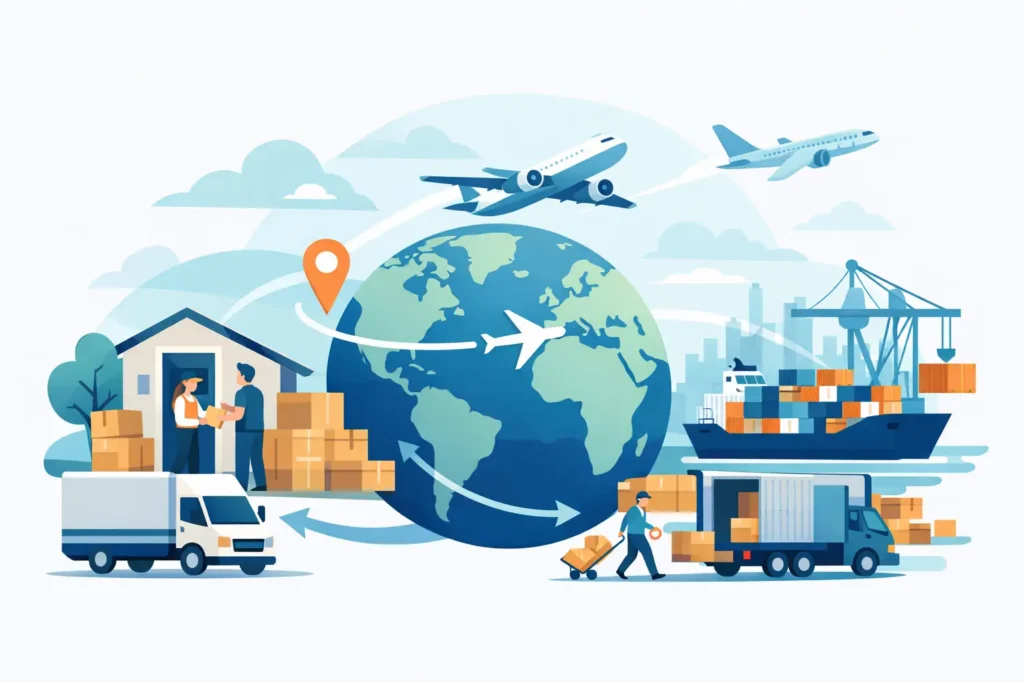
A delayed pickup in Dubai can disrupt customs timing in Mumbai. A missing document in India can hold delivery in the UAE. That is why a strong door to door logistics guide matters – not as a sales phrase, but as a working framework for moving cargo without avoidable surprises.
For importers, exporters, and supply chain teams, door-to-door shipping is attractive because it places one provider in charge of the full movement. That usually includes pickup, export handling, freight, customs coordination, destination clearance, and final delivery. The benefit is clear accountability. The catch is that performance depends on planning, documentation, route knowledge, and realistic control over handoffs.
What door-to-door logistics actually covers
A door-to-door shipment begins at the shipper’s location and ends at the consignee’s address. Depending on the cargo and the trade lane, that can involve road transport, air freight, ocean freight, warehousing, customs clearance, and last-mile delivery.
For businesses shipping between India, the UAE, and other international markets, the model is especially useful when internal logistics resources are limited or when multiple service providers create too much friction. Instead of coordinating a transporter, broker, freight carrier, and local delivery partner separately, the shipper works through one operational plan.
That said, door-to-door does not mean every shipment follows the same process. A palletized commercial load, a luxury vehicle, an LCL shipment, and oversized project cargo all require different handling methods, transit planning, and documentation controls.
Door to door logistics guide: how the process works
The process starts with shipment assessment. Cargo type, dimensions, weight, value, origin, destination, urgency, and import rules all shape the plan. At this stage, an experienced freight forwarder will also check whether the shipment is best suited for air, ocean, or multimodal transport.
Pickup comes next. This sounds simple, but it often determines whether the rest of the chain stays on schedule. The cargo needs to be packed correctly, labeled clearly, and ready for loading. If a truck arrives and the shipment is not prepared, the delay can cascade into missed vessel cutoffs or flight bookings.
After pickup, the cargo moves into export processing. This includes documentation review, handling at the point of origin, and customs-related checks where required. For international cargo, accuracy here matters more than speed alone. A fast booking does not help if invoice values, HS codes, or packing details do not match what customs expects.
The main freight leg follows. Air freight works well for urgent, high-value, or time-sensitive cargo. Ocean freight is usually the more cost-effective option for heavier or less urgent shipments. Land freight may handle regional segments or cross-border movement where geography allows. In many real-world shipments, the best answer is a combination rather than a single mode.
At destination, customs clearance and local handling come into focus. This is often where hidden weaknesses in a logistics plan become visible. Missing permits, unclear cargo descriptions, or unplanned duties can stall delivery. Once the shipment is released, final-mile transport completes the job at the consignee’s address.
Choosing the right mode for your cargo
Mode selection is one of the biggest cost and service decisions in any door-to-door move. It should reflect the cargo profile, not just a preference for the lowest quoted rate.
Air freight is the premium option when time is critical. It helps with urgent spare parts, retail replenishment, medical goods, and cargo where delay carries a larger commercial cost than the freight rate. The trade-off is price. If cargo is bulky but not especially heavy, volumetric charges can also make air less attractive.
Ocean freight is often the right fit for full container loads, LCL shipments, machinery, and planned inventory movements. It gives better cost control on larger volumes, but transit times are longer and schedule changes can affect planning. For businesses with stable forecasting, that trade-off is manageable. For reactive supply chains, it may create pressure.
Land freight plays an essential role in first-mile and final-mile delivery and, in some lanes, cross-border transport. Reliability here depends on local execution, vehicle availability, and proper coordination with customs and warehouse schedules.
Where shipments usually go wrong
Most cargo delays are not caused by the vessel or aircraft. They come from preventable operational gaps.
The first issue is incomplete or inaccurate documentation. Commercial invoices, packing lists, certificates, and consignee details need to align across every stage. Even a minor mismatch can trigger inspection, amendment requests, or customs holds.
The second issue is poor cargo preparation. Weak packaging, incorrect markings, or failure to secure freight properly can lead to damage claims, safety problems, or rejection at handling points. This is especially relevant for fragile goods, vehicles, and oversized cargo.
The third issue is unrealistic transit expectations. Door-to-door service is efficient, but it is not immune to customs exams, port congestion, weather disruptions, or regulatory checks. Good providers set timelines with buffers and communicate early when conditions change.
The fourth issue is choosing a provider that only manages one part of the move well. A company may be strong in freight booking but weak in customs handling or destination delivery. Door-to-door performance depends on the whole chain, not one strong segment.
The value of customs expertise in India and the UAE
If your cargo moves through India or the UAE, customs capability should not be treated as an add-on. It is central to shipment reliability.
Both markets are major trade hubs, but each has its own procedures, clearance standards, tariff treatment, and compliance expectations. Importers and exporters need support that goes beyond general freight coordination. Classification, declaration accuracy, supporting documents, and timing all affect whether cargo moves as planned.
This is where a provider with operational presence in both countries can reduce risk. Instead of managing separate parties on each side, shippers gain better control over pre-clearance checks, exception handling, and communication between origin and destination teams. For businesses moving recurring cargo between India and the UAE, that consistency can improve both transit predictability and internal planning.
Door to door logistics guide for special cargo
Not all shipments fit inside a standard carton or container plan. Vehicles, project cargo, break bulk, and high-value goods need more than standard transport booking.
Car shipping, for example, may involve RORO or containerized movement depending on the vehicle type, value, and destination requirements. Project cargo may require route surveys, lifting plans, port handling coordination, and cargo lashing expertise. LCL shipments need careful consolidation and deconsolidation to avoid damage, delay, or documentation confusion.
Special cargo also changes the insurance conversation. Basic carrier liability is rarely enough for high-value or specialized freight. Marine cargo insurance should match the actual exposure, including handling risks, transit mode, and destination conditions.
How to choose a door-to-door logistics partner
A good logistics partner should be able to explain the shipment plan in plain terms. That means pickup scope, mode selection, customs process, estimated transit, delivery conditions, and cost structure should all be clear before the cargo moves.
Look for operational depth, not just broad claims. Ask whether the provider handles customs directly, manages warehousing if needed, supports both commercial and specialized cargo, and has experience in your trade lane. If your cargo moves between India and the UAE, regional knowledge is not optional.
Communication standards also matter. You need shipment visibility, fast response when exceptions happen, and a team that understands the commercial impact of delay. Mass Freight Forwarding works with this model by combining freight movement, customs support, and end-to-end cargo coordination for businesses that need dependable shipping execution across these routes.
Price deserves attention, but lowest cost is not always lowest landed expense. A cheaper quote can become more expensive if it excludes handling, storage, customs delays, failed delivery attempts, or cargo damage from poor preparation.
The strongest door-to-door logistics strategy is not about handing everything off and hoping for the best. It is about putting the shipment in the hands of a team that can control the details from pickup to delivery. When that happens, cargo moves with fewer surprises, better timing, and much less pressure on your internal team.