
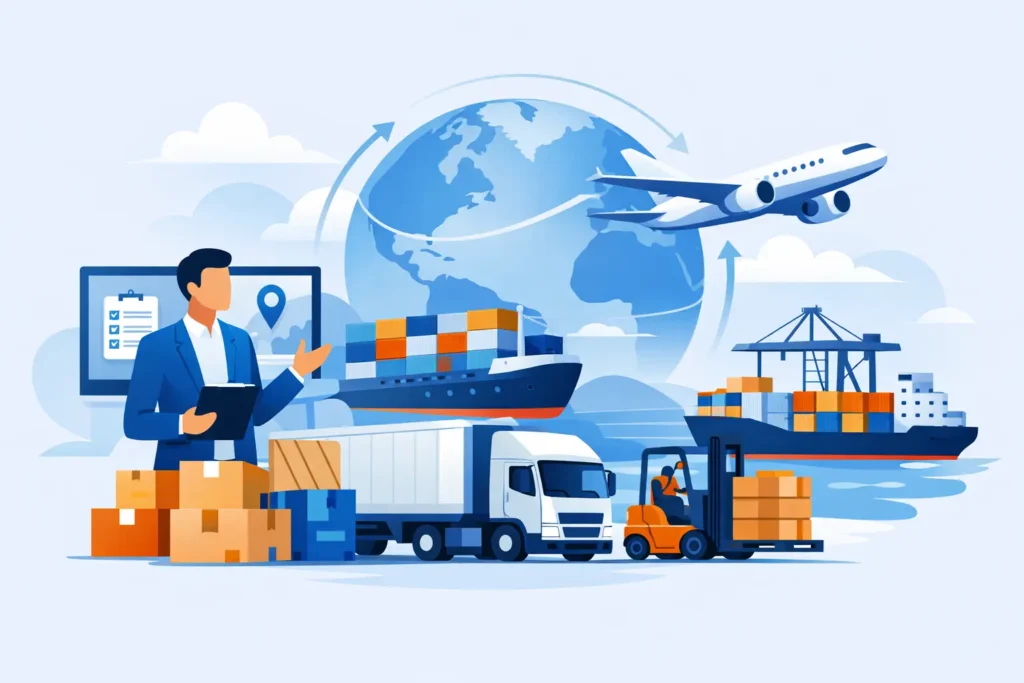
A delayed shipment can tie up working capital, interrupt production, and disappoint customers long before it reaches a warehouse. For growing importers and exporters, freight forwarding for SMEs is not simply about booking space on a vessel or aircraft. It is about making informed transport decisions, preparing compliant documents, and keeping cargo moving across borders without avoidable cost or delay.
Small and midsize businesses often operate with less inventory buffer and fewer internal logistics resources than larger companies. That makes every shipment more consequential. A forwarder with experience in India, the UAE, and international trade lanes can turn a complicated process into a managed shipping plan built around the cargo, deadline, budget, and destination.
Why freight forwarding for SMEs needs a tailored approach
A large enterprise may have dedicated logistics teams, contracted carrier allocations, and warehouses in multiple countries. An SME may have one buyer waiting for a container, a seasonal sales window, or a production line dependent on imported components. The shipping strategy needs to reflect that reality.
The lowest freight rate is not always the lowest landed cost. A cheaper route with several transshipments may add transit time and handling risk. An incomplete commercial invoice can delay customs clearance and create storage or demurrage charges. Sending a small urgent shipment by air may cost more per kilogram, but it can protect a customer relationship or prevent a costly stockout.
A capable freight forwarder helps businesses weigh these choices before cargo is collected. The goal is fast, secure, and cost-effective movement, not a one-size-fits-all transport booking.
Start with the shipment, not the shipping method
The right mode depends on what is moving and why. Businesses should first define the cargo profile: product type, dimensions, weight, value, packing method, dangerous goods status, origin, destination, and delivery deadline. These details determine which services are suitable and which risks need attention.
Air freight for speed and higher-value cargo
Air freight is often appropriate for samples, urgent spare parts, electronics, garments, pharmaceuticals, and high-value cargo with strict delivery deadlines. It reduces transit time, but airline capacity, chargeable weight, airport handling, and destination clearance requirements all affect the final cost.
For SMEs shipping between India and the UAE, air freight can be a practical option when speed matters more than unit freight cost. Proper packing and accurate paperwork are essential because airport cargo procedures move quickly and corrections can cause missed flights.
Ocean freight for planned volume
Ocean freight generally suits larger, heavier, or less time-sensitive shipments. Full container load shipping gives a business exclusive use of a container, while less-than-container-load, or LCL, groupage allows smaller consignments to share container space with other cargo.
LCL can be a smart entry point for SMEs that do not yet have full-container volumes. However, it involves consolidation and deconsolidation, which can extend transit and handling time. For regular high-volume shipments, a full container may provide better control and, in some cases, a better overall cost position.
Land freight for regional distribution
Road transport connects ports, airports, warehouses, and final delivery locations. It also supports cross-border movements where permitted, as well as domestic distribution in India and the UAE. The practical details matter: vehicle type, loading access, cargo securing, delivery appointment requirements, and whether the receiver can unload the shipment.
For oversized machinery, vehicles, or project cargo, standard trucking may not be enough. Specialized equipment, route planning, cargo lashing, permits, and coordinated handling may be required before the cargo leaves the origin.
Customs clearance is a business-critical service
Customs is where a shipment can move efficiently or lose time and money. Importers and exporters must provide correct product descriptions, values, quantities, tariff classifications, country-of-origin information, and supporting documents. Requirements vary by country, commodity, and transaction type.
For shipments to or from India and the UAE, customs clearance should be considered early in the booking process rather than after cargo arrives. A forwarder can review documentation, identify likely clearance requirements, and coordinate the required filings and handling. This does not remove the shipper’s responsibility for truthful and accurate information, but it reduces the risk of preventable errors.
Businesses should also account for duties, taxes, permits, inspections, and local regulations when calculating landed cost. If a product has special restrictions, certification needs, or labeling rules, discovering that after the cargo has arrived can be expensive.
Build a shipping plan around total cost
Freight charges are only one part of the logistics budget. A useful quote should help an SME understand the broader cost picture, including origin handling, documentation, transport, customs-related charges, destination handling, delivery, and possible storage costs.
Price comparisons only work when the scope is comparable. One quote may include pickup and delivery while another covers port-to-port freight only. One may be based on estimated cargo dimensions, while another changes after a warehouse measurement. Asking what is included, excluded, and subject to change gives procurement teams a clearer basis for decisions.
It also helps to plan around shipment frequency. Consolidating several small orders into one planned movement can reduce repeated handling and documentation costs. On the other hand, holding inventory too long just to fill a container can create its own cash-flow pressure. The best approach depends on sales velocity, supplier reliability, product value, and storage capacity.
What SMEs should expect from a freight forwarder
A forwarder should be more than a source of carrier rates. For a growing business, the value is in operational coordination and clear communication from collection through final delivery.
A dependable service partner should be able to support four essential areas:
- Mode and route selection based on cargo urgency, volume, and cost priorities.
- Export and import documentation support, including customs clearance coordination.
- Shipment visibility through meaningful status updates and early notice of exceptions.
- Cargo protection planning, including appropriate packing, lashing, and marine insurance options.
Not every shipment needs every service. A repeat importer with an experienced internal team may only need port handling and clearance support. A first-time exporter may need help arranging pickup, documents, freight, insurance, destination clearance, and door-to-door delivery. Customized service is valuable because the level of support can match the actual shipment risk.
Reduce risk before the cargo is collected
Most freight problems begin before departure. Incorrect dimensions can change an air freight charge. Weak packaging can lead to damage during consolidation. A vague cargo description can invite customs questions. Missing contact details can delay delivery at destination.
Before collection, confirm the commercial invoice, packing list, consignee details, Incoterms, package count, weights, dimensions, and pickup readiness. If the cargo is fragile, high-value, oversized, temperature-sensitive, or hazardous, notify the forwarder at the quotation stage. These factors affect equipment, routing, packaging, carrier acceptance, and insurance considerations.
Incoterms deserve particular attention. They define responsibilities between buyer and seller for transport, costs, and risk at different points in the shipment. They do not replace a transport contract or insurance, and they should not be selected casually. Clear agreement with the trading partner prevents disputes about who pays for freight, clearance, duties, or final delivery.
Create consistency as your trade volume grows
Once an SME begins shipping regularly, consistency becomes a cost-control tool. Keep a standardized product and shipping data file, use approved packing specifications, and maintain a calendar for purchase orders, production completion, and expected departures. This makes it easier to book earlier, avoid premium last-minute services, and identify recurring bottlenecks.
It is also useful to review shipments periodically. Look at transit performance, clearance delays, accessorial charges, damage incidents, and changes in supplier volumes. A route that worked six months ago may no longer be the best option if demand, carrier schedules, or destination requirements have changed.
Mass Freight Forwarding supports businesses with transport planning, customs handling, and door-to-door cargo services across India, the UAE, and global markets. The right starting point is a clear conversation about the cargo and the commercial outcome you need.
Your next shipment does not need to be your largest to deserve careful planning. Share complete cargo information early, ask for a scope that reflects the real journey, and choose a forwarding partner prepared to protect both your goods and your trading commitments.