
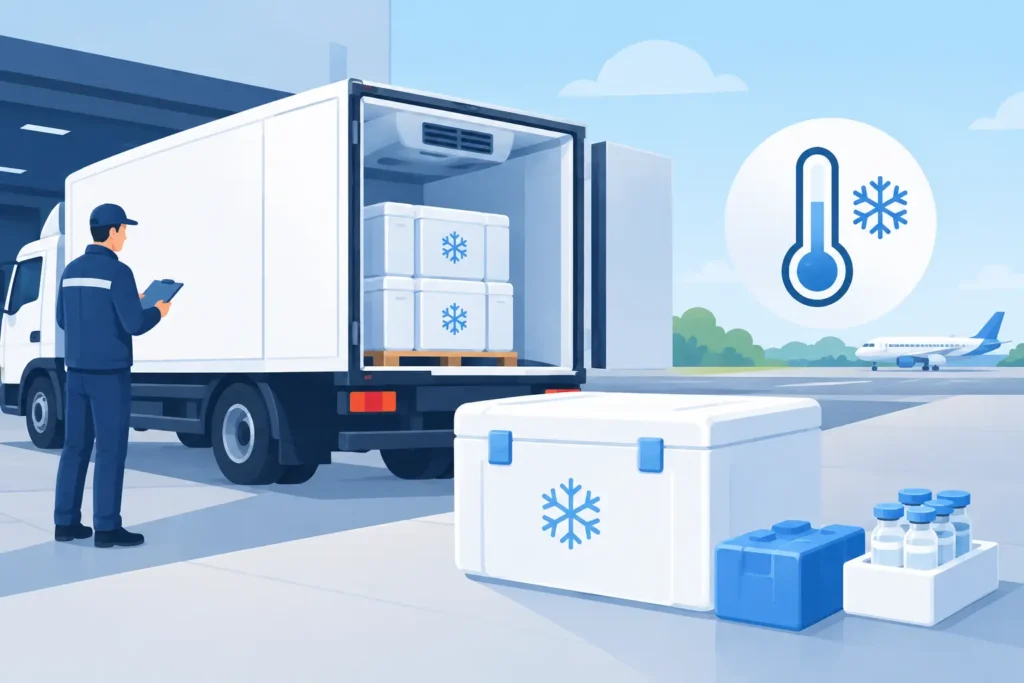
A small temperature excursion can turn a valuable shipment into a rejected delivery. When you ship temperature sensitive cargo, the task is not simply to select a carrier or book space. You need to protect a defined temperature range from the moment goods leave the facility until they are received, cleared, and inspected at destination.
For importers, exporters, and supply chain managers moving products through India, the UAE, and global trade lanes, that means coordinating packaging, transit mode, handling instructions, customs documents, and real-time communication. The right plan depends on the product, the allowed temperature range, the shipment value, and how long the cargo may sit at airports, ports, or border checkpoints.
Start With the Product Temperature Profile
The first question is not whether to use air or ocean freight. It is what the product can tolerate. Some cargo must stay frozen, some must remain chilled, and some needs controlled room temperature. A pharmaceutical product that must remain between 36°F and 46°F has a very different risk profile from chocolate, fresh produce, cosmetics, specialty chemicals, or electronic components affected by heat and humidity.
Ask the manufacturer or quality team for a written shipping profile before arranging transport. It should identify the required temperature range, acceptable excursion limits, sensitivity to humidity or light, recommended packaging, shelf-life requirements, and any restrictions on freezing. This information gives your freight forwarder and carrier a workable operating standard rather than a general instruction to “keep cool.”
Temperature is only one variable. Products may be damaged by vibration, condensation, oxygen exposure, or repeated handling. Fresh flowers and seafood, for example, need strong temperature control but also depend on ventilation and fast movement. Biologics may require validated packaging and a complete temperature record for quality release.
Choose the Right Way to Ship Temperature Sensitive Cargo
Air freight is often the preferred option for high-value, short-shelf-life, or urgently needed cargo. It reduces total transit time and can provide access to temperature-controlled terminals, airline cool rooms, and priority handling services. The trade-off is cost. Air freight rates, specialized packaging, terminal charges, and last-mile refrigerated delivery can make the shipment significantly more expensive.
Ocean freight can be cost-effective for larger volumes, especially for reefer container shipments. A refrigerated container can maintain a selected set point throughout the voyage, making it suitable for food products, beverages, ingredients, chemicals, and certain pharmaceutical loads. However, ocean freight involves longer lead times and more exposure to port congestion, transshipment delays, and destination clearance holds.
For shipments within the UAE, India, or across connected regional routes, temperature-controlled road transport may be the best solution. Refrigerated vehicles are useful for collection, airport transfer, port delivery, and final-mile distribution. The vehicle must be appropriately sized, pre-cooled before loading, and operated by a driver who understands the handling requirements.
Many shipments use more than one mode. A shipment may travel by refrigerated truck to an airport, fly in an active temperature-controlled unit, move through a destination cool room, and then be delivered in a reefer vehicle. Each handoff is a potential risk point, so the full route matters more than any single transport segment.
Select Packaging That Matches the Lane
Packaging protects cargo during the periods when external conditions are least predictable. Passive packaging uses insulated shippers, gel packs, dry ice, phase-change materials, thermal blankets, or insulated pallet covers. It does not require a power source, but it has a limited performance duration. Its suitability depends on ambient temperatures, expected transit time, package size, and the duration of possible delays.
Active packaging uses powered containers or systems that maintain a controlled environment. These solutions are often selected for high-value pharmaceuticals and other cargo where the cost of failure exceeds the cost of specialized equipment. They can offer better control over longer or more complex routes, although availability, rental conditions, battery charging, and return logistics need to be planned in advance.
Do not choose packaging solely on the basis of the scheduled transit time. Build in a realistic buffer for cargo acceptance, airline cutoffs, flight disruptions, weekend storage, customs clearance, and delivery appointments. A package designed to protect goods for 24 hours may not be appropriate for a route that is scheduled for 18 hours but could face a 12-hour disruption.
Pre-conditioning is equally important. Gel packs, phase-change materials, containers, and the product itself must be prepared according to the packaging instructions. Loading warm products into a cold box does not create a stable cold chain. It increases the risk of an early temperature excursion.
Plan Handling at Every Transfer Point
The most common temperature-control failures occur during loading, unloading, staging, and clearance, not necessarily during the line-haul journey. Cargo may be left on an airport ramp, held near a warehouse door, or staged in a hot vehicle while paperwork is completed. In hot climates, even short exposure can be significant.
Your shipment instructions should specify the temperature range, handling priority, storage requirement, contact persons, and escalation procedure. Labels should be clear, durable, and consistent with the shipping documents. If the cargo requires “do not freeze” protection, that instruction must be as visible as the requirement to keep it cool.
For palletized freight, consider how air circulates around the load. Poor pallet configuration, blocked vents, or excessive shrink wrap can reduce cooling performance. Reefer containers also need correct loading patterns and proper airflow. The container set point alone is not proof that every carton has stayed within range.
At origin and destination, confirm whether the terminal has temperature-controlled storage and whether it is available during your shipment window. This is particularly important for weekend arrivals, holiday periods, and cargo that may require an inspection before release.
Use Monitoring to Create Accountability
A temperature data logger provides evidence of conditions during transit. For many commercial shipments, a single-use logger inside a representative carton is sufficient. For high-value or regulated cargo, multiple loggers may be needed to identify temperature differences across pallets, containers, or compartments.
Real-time monitoring devices can provide location, temperature, light exposure, and alerts while cargo is moving. They are useful when a response is possible, such as arranging a recovery action after an airport delay. They also add cost and may require airline approval because some devices use wireless connectivity or batteries.
Monitoring is valuable only if someone is responsible for reviewing alerts and responding. Establish the escalation path before departure. Decide who can approve re-icing, cold-storage transfer, rebooking, inspection, or disposal if the shipment suffers a serious excursion. For products with strict quality controls, agree in advance on whether the consignee can accept cargo pending a quality assessment.
Get Customs and Documentation Right
Customs delays can break an otherwise well-managed cold chain. Accurate commercial invoices, packing lists, airway bills or bills of lading, certificates of origin, import permits, product registrations, and health or sanitary certificates should be ready before the cargo arrives.
Requirements vary by commodity and destination. Food, plants, animal products, pharmaceuticals, and chemicals may require permits, inspections, or approvals that standard cargo does not. India and the UAE each have product-specific clearance rules, and destination requirements can change based on origin, product composition, and intended use.
Work with customs specialists early enough to verify classifications, permits, labeling, and document wording. A paperwork error that causes a one-day hold may be inconvenient for general cargo. For chilled or frozen goods, it may cause financial loss, spoilage, and a dispute over liability.
Cargo insurance also deserves attention. Review whether the policy covers temperature variation, deterioration, delay-related loss, or rejection by a buyer. Coverage terms differ, and not every policy treats a temperature excursion as a covered event. Keep packaging specifications, logger records, loading photos, and carrier communications in case a claim is needed.
Build a Contingency Plan Before Departure
A temperature-controlled shipment should have a recovery plan, not just a booking confirmation. Consider what happens if a flight is canceled, a vessel rolls to a later departure, a reefer unit alarms, customs requests an inspection, or the consignee cannot receive the cargo on time.
The plan should identify alternative flights or services, available cold storage, refrigerated trucking options, after-hours contacts, and decision-makers authorized to approve additional cost. It should also state the action required for each risk. For example, a chilled pharmaceutical shipment may be moved to certified cold storage immediately, while a frozen food shipment may need reefer power continuity and a temperature check before release.
Mass Freight Forwarding can coordinate freight movement, customs handling, and route-specific support for temperature-sensitive shipments moving to and from India, the UAE, and international destinations. The objective is practical: reduce avoidable exposure while keeping the shipment on schedule and the customer informed.
The best time to solve a cold-chain problem is before cargo is packed. Share the product profile early, allow realistic time for customs and handling, and treat every transfer point as part of the temperature-control plan. That preparation gives your cargo the best chance of arriving safe, compliant, and ready for use.