
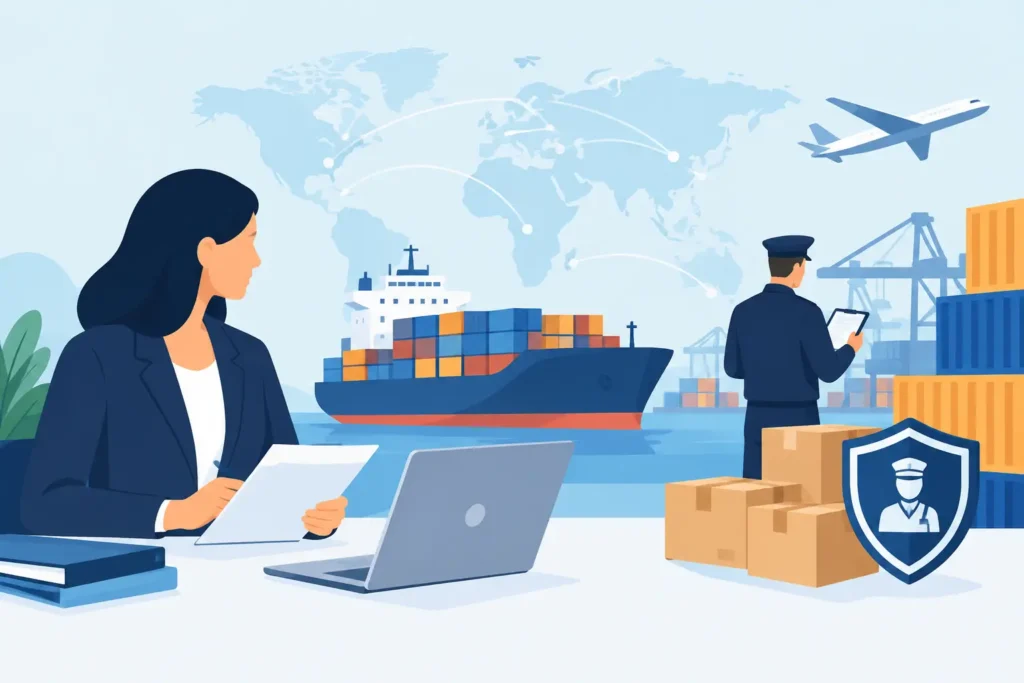
A shipment can arrive at the airport or port on schedule and still stop moving the moment customs asks a simple question: who is legally responsible for importing these goods? The importer on record IOR is the party that answers that question. For companies moving cargo into India, the UAE, or other international markets, understanding this role before shipping can prevent storage charges, clearance delays, and compliance exposure.
An IOR arrangement is not just an administrative box on a customs form. It determines who files the import declaration, pays applicable duties and taxes, holds the required registrations, and accepts responsibility for the accuracy of the shipment information. That makes it a core part of shipment planning, especially when goods are sold across borders, imported temporarily, or delivered to a customer that cannot act as the legal importer.
What an Importer on Record IOR Does
The importer on record is the legal entity or individual named on customs entry documents as responsible for imported goods. In many cases, it is the buyer, consignee, distributor, or local branch receiving the cargo. However, the consignee and IOR are not always the same party.
The IOR is expected to provide correct product descriptions, classifications, customs values, country-of-origin details, permits, and supporting commercial documents. It also assumes responsibility for duties, VAT or GST where applicable, and any penalties arising from incorrect declarations or noncompliance.
A freight forwarder or customs broker can prepare documents, coordinate with carriers, submit declarations where authorized, and communicate with customs authorities. Those services are highly valuable, but they do not automatically transfer the legal responsibility of the IOR. The importing entity must still be eligible to import and must ensure the shipment is declared correctly.
Why the Role Matters Before Cargo Ships
Many avoidable clearance issues begin before cargo is collected from the supplier. A business may arrange air freight or ocean freight first, then discover that the overseas buyer lacks an import license, tax registration, customs code, or local establishment required in the destination country.
By that stage, the freight is already in transit. The alternatives may be expensive: appointing another qualified importer, amending documents, returning the cargo, or placing it in storage while the paperwork is resolved. For time-sensitive shipments, such as automotive parts, technology equipment, project materials, or retail inventory, the cost is more than storage. It can interrupt production, delivery commitments, and customer relationships.
Importer on Record IOR Responsibilities
Requirements differ by commodity and destination, but an IOR commonly handles five connected responsibilities:
- Holding the necessary local registrations, licenses, or import authority.
- Confirming the correct HS classification, customs valuation, and country of origin.
- Providing commercial invoices, packing lists, certificates, permits, and other supporting records.
- Paying customs duty, import VAT, GST, excise, anti-dumping duty, or other applicable charges.
- Retaining import records and responding to post-clearance questions, audits, or customs reviews.
These obligations are why an IOR should have direct visibility over the goods being imported. Product descriptions copied from a supplier invoice without review can create problems if they are vague, incomplete, or inconsistent with the actual cargo. Terms such as “parts,” “samples,” or “equipment” rarely provide enough detail for reliable classification.
The same applies to declared value. Customs authorities may examine related-party transactions, assists, royalties, freight additions, discounts, and other factors that affect the customs value. A low invoice value might appear to reduce duty, but it can invite reassessment, delays, or penalties if it cannot be supported.
IOR, Consignee, Buyer, and Customs Broker: The Difference
International shipping involves several parties, and their roles can overlap. The buyer is the party purchasing the goods. The consignee is the named receiver on the transport document. The IOR is the party legally accountable to customs. A customs broker is an authorized intermediary that processes clearance work on behalf of the importer.
For a straightforward shipment, one local business may be all four: buyer, consignee, IOR, and the party instructing the broker. Cross-border trade is often more complicated. A U.S. company may sell equipment to a client in the UAE, while the client asks for delivery to a project site. If the UAE client has the required registration and agrees to act as IOR, that can be workable. If it does not, the freight plan needs to address the issue before dispatch.
Incoterms also affect commercial expectations, but they do not remove customs obligations. A seller may agree to deliver under DDP terms, for example, yet the parties still need a legally qualified importer in the destination country. Using a delivery term without confirming the IOR is a common source of confusion.
Planning Imports Into India and the UAE
India and the UAE are major trading centers with active ports, airports, free zones, and regional distribution networks. They also have specific customs, tax, registration, and commodity-control requirements. Businesses should not assume that a process used for one destination will apply unchanged to another.
For imports into India, the importer generally needs the appropriate importer credentials and tax-related registrations, subject to the nature of the transaction and goods. Product controls may apply to electronics, food products, chemicals, medical items, machinery, and other regulated cargo. Accurate classification and supporting documents are essential for customs assessment.
In the UAE, the correct approach can depend on whether cargo is entering the mainland, a free zone, or moving onward under a customs procedure. The importing entity, customs registration, VAT treatment, and final cargo movement should align. Free-zone cargo may offer operational advantages, but it does not mean compliance requirements disappear when goods are released into the local market.
For both markets, the most dependable approach is to review the shipment before booking: identify the IOR, confirm product eligibility, check the documents, and establish who will pay duties and taxes. This is particularly important for high-value cargo, vehicles, consolidated LCL shipments, and project cargo with multiple components.
When a Third-Party IOR May Be Needed
A third-party IOR solution may be considered when the buyer has no local entity, lacks the required import registration, or needs to bring goods into a market for a limited project. This can be relevant for international technology deployments, trade-show materials, replacement parts, specialized machinery, and market-entry shipments.
However, this option requires careful review. Not every product, country, or transaction can be handled through a third-party IOR. Controlled goods, products requiring local certifications, and goods intended for resale may face restrictions. The commercial chain must also be clear: who owns the goods, who is responsible for product compliance, and how the cargo will be transferred after clearance.
A qualified logistics partner can help assess whether the route, documents, and customs process fit the shipment. The goal is not to force a standard solution onto every move. It is to select an import structure that is legal, practical, and cost-effective for the cargo and destination.
Documents That Support a Clean Clearance
Customs clearance becomes easier when documents tell one consistent story. The commercial invoice should clearly identify the seller, buyer, goods, currency, quantity, unit value, and delivery terms. The packing list should match the actual packages, weights, and dimensions. Transport documents must reflect the correct shipper, consignee, and cargo details.
Depending on the cargo, customs may also require a certificate of origin, import permit, product certificate, technical data sheet, insurance document, or authorization letter. The exact paperwork depends on the commodity and destination, so document review should happen before pickup rather than after arrival.
Mass Freight Forwarding supports importers and exporters with freight planning, customs coordination, and cargo movement between India, the UAE, and global trade lanes. Early shipment review helps identify IOR responsibilities, documentation gaps, and likely clearance requirements while there is still time to make practical decisions.
The right IOR structure is the one that matches the transaction, the destination rules, and the real movement of goods. Confirm it at the quotation stage, verify it again before dispatch, and give customs documents the same attention as the cargo itself. That preparation protects delivery timelines and keeps your supply chain moving with greater confidence.