
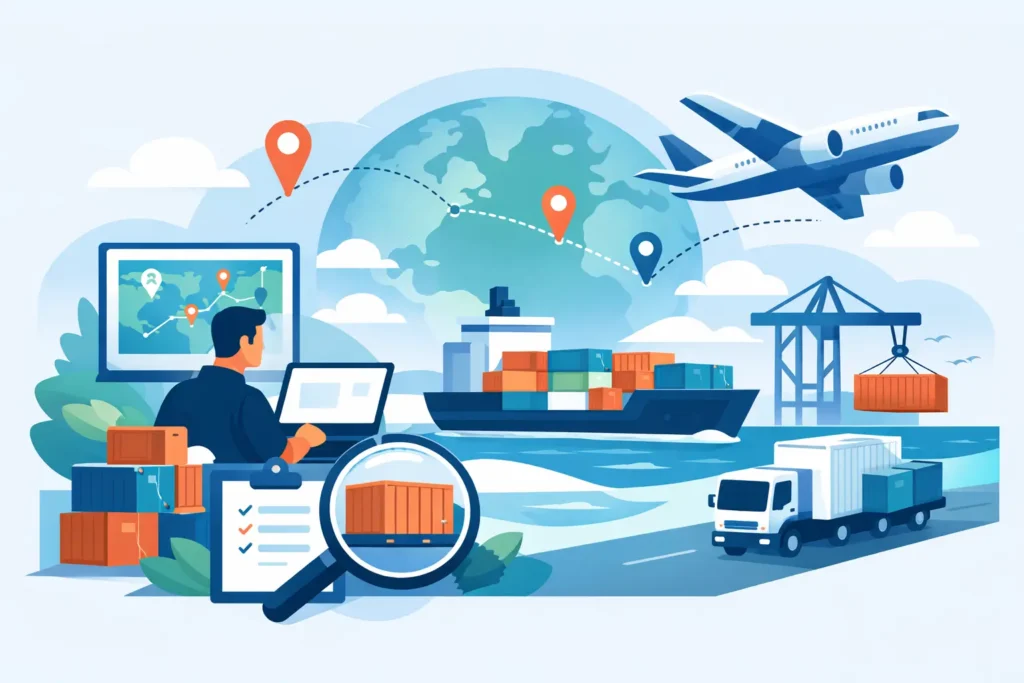
A container can be loaded, a bill of lading can be issued, and a shipment can still fall behind schedule before the exporter hears a word about it. The resulting problem is not simply a late arrival. It can mean a missed production slot, an unhappy overseas buyer, demurrage exposure, or a payment dispute. Shipment visibility for exporters gives commercial and logistics teams the information needed to act before a routine delay becomes a costly exception.
For exporters moving cargo between India, the UAE, and international markets, visibility must go beyond a vessel name or an airline reference. It should show where the cargo is, what stage it has reached, whether documentation and customs requirements are complete, and what could affect the promised delivery date. Reliable updates turn freight movement from a black box into a managed process.
What Shipment Visibility Means for Exporters
Shipment visibility is the ability to monitor cargo and its related milestones from pickup through final delivery. Depending on the transport mode, this may include collection from the factory or warehouse, cargo receipt at the port or airport, export customs clearance, loading, departure, transshipment, arrival, import clearance, and delivery to the consignee.
The value is not in receiving more messages. It is in receiving useful, verified information at the right time. An exporter needs to know whether cargo has physically departed, not merely whether a booking was confirmed. A supply chain manager needs an updated estimated arrival date when a vessel omits a port or an airline rolls cargo to a later flight. The finance team may need proof of shipment to support payment terms. Each team relies on the same movement data, but uses it for a different decision.
For ocean freight, visibility often centers on container gate-in, vessel loading, departure, transshipment, discharge, and delivery status. For air freight, the critical milestones are acceptance, security screening, flight departure, arrival, customs release, and final handover. Land freight requires close attention to pickup times, border crossings, route disruptions, and delivery confirmation.
Why Exporters Need More Than a Tracking Number
A tracking number is useful, but it rarely gives an exporter the full operating picture. Carrier systems can show standard milestones while leaving out the commercial details that matter most: whether export documents were submitted correctly, whether the container was released by customs, whether the consignee has received pre-alert documents, or whether a port delay will affect a buyer’s delivery appointment.
Strong visibility connects physical movement with documentation, compliance, and communication. This is especially relevant on India-UAE trade lanes, where cargo may move through multiple parties including transporters, customs brokers, terminals, airlines or shipping lines, and destination delivery teams. A delay at any handoff can affect the whole shipment plan.
Exporters also need visibility because buyers increasingly expect proactive updates. If a consignee learns about a delay only after the expected arrival date has passed, confidence in the exporter can decline quickly. By contrast, an early and accurate update allows the buyer to adjust inventory plans, labor schedules, and onward distribution.
The Milestones That Need Close Attention
Not every shipment requires the same level of reporting. A time-sensitive air shipment of spare parts needs closer monitoring than a flexible ocean shipment of non-urgent inventory. High-value vehicles, project cargo, temperature-sensitive goods, and cargo with strict delivery appointments also require more detailed control.
Still, exporters should expect visibility around several core milestones:
- Cargo pickup confirmation and warehouse receipt
- Export customs filing, examination status, and clearance
- Port or airport acceptance and loading confirmation
- Actual departure and revised estimated arrival information
- Transshipment, route change, or delay alerts
- Destination arrival, import clearance, and final delivery confirmation
These milestones are not just operational checkpoints. They support decisions about customer communication, inventory allocation, insurance notifications, and payment documentation. A shipment that has reached the destination port is not necessarily ready for collection. Import clearance, local charges, cargo release, and delivery scheduling can still affect the final timeline.
Actual Departure Matters More Than Scheduled Departure
Schedules are planning tools, not guarantees. Vessels can be delayed due to congestion, weather, port omissions, or equipment constraints. Flights can be changed because of capacity, security requirements, or airline operational decisions. Exporters should distinguish between scheduled dates and confirmed physical movement.
This is where a freight forwarder with active operational follow-up adds value. Rather than passing along an automated carrier message without context, the forwarder should clarify the likely impact, identify available alternatives when appropriate, and coordinate the next steps with the exporter and consignee.
Documentation Status Is Part of Visibility
Cargo visibility without document visibility leaves a major gap. A shipment may be moving according to plan while its commercial invoice, packing list, certificate of origin, bill of lading instructions, or destination requirements are incomplete. The cargo can then arrive on time but remain delayed at clearance.
For exporters, the practical question is simple: are the documents ready, accurate, and available before they are needed? This is particularly important for shipments subject to product-specific approvals, certificates, labeling requirements, or buyer-issued documentation instructions. Early review reduces the risk of amendments, storage charges, and avoidable clearance delays.
How Visibility Reduces Freight Costs
Visibility does not eliminate every disruption. Global freight depends on carrier capacity, weather, port operations, customs authorities, and local transport conditions. What visibility does provide is time to make better choices.
If a container is likely to miss a connecting vessel, an exporter can notify the buyer, review inventory alternatives, or adjust the destination delivery plan. If cargo is held for customs examination, the exporter can provide supporting documents quickly rather than waiting for the issue to become urgent. If a delivery appointment must be moved, the team can act before a failed delivery creates additional charges.
The cost benefits are often indirect but significant. Better information can help avoid storage, detention, demurrage, redelivery, overtime handling, and last-minute air freight used to recover from an avoidable delay. It also reduces the internal time spent chasing updates from multiple parties.
That said, a higher frequency of updates is not always necessary. For lower-value, repeat shipments on stable lanes, milestone reporting may be sufficient. For project logistics, luxury vehicle shipping, or urgent commercial cargo, exporters may need exception-based updates, dedicated coordination, and more detailed reporting. The right level depends on cargo value, transit urgency, route complexity, and the consequences of delay.
Building a Practical Visibility Process
Effective visibility starts before cargo is collected. Exporters should provide complete shipment details, including commodity description, dimensions and weight, Incoterms, pickup location, destination, consignee contacts, required delivery date, and any special handling needs. Incomplete booking information creates confusion later, particularly when cargo requires special equipment, lashing, dangerous goods handling, or customs approvals.
Next, agree on the communication process. Determine who should receive milestone updates, who is authorized to approve changes, and when an exception should be escalated. A procurement manager may only need weekly status reports, while a warehouse team needs delivery appointment confirmation and a finance contact needs shipping documents. Clear responsibilities prevent important messages from being lost in shared inboxes.
Exporters should also ask practical questions at the outset. Will the forwarder confirm actual departure? How are transshipment delays reported? Who follows up on export customs clearance? What information will be provided at destination? Is proof of delivery shared after final handover? Clear answers create accountability and help set realistic expectations with customers.
Visibility Across India, the UAE, and Global Markets
Trade between India and the UAE often moves quickly, but speed should not be mistaken for simplicity. Documentation requirements, customs processes, cargo handoffs, and destination delivery arrangements still need close coordination. The same applies when shipments continue onward to Europe, Africa, North America, or other GCC markets.
A forwarder that understands both origin and destination operations can provide more useful shipment updates than a party that only sees one segment of the move. This is valuable for LCL groupage shipments, where consolidation and deconsolidation add extra stages, and for door-to-door cargo services, where final-mile coordination determines whether the shipment is truly complete.
Mass Freight Forwarding supports exporters with coordinated freight, customs, and delivery handling across India, the UAE, and global trade lanes. The objective is straightforward: provide timely information, address exceptions early, and keep cargo moving safely toward its delivery commitment.
A good visibility process does more than tell you where freight is. It gives your team enough time and confidence to protect customer relationships, manage costs, and make the next decision before the delay reaches your customer.