
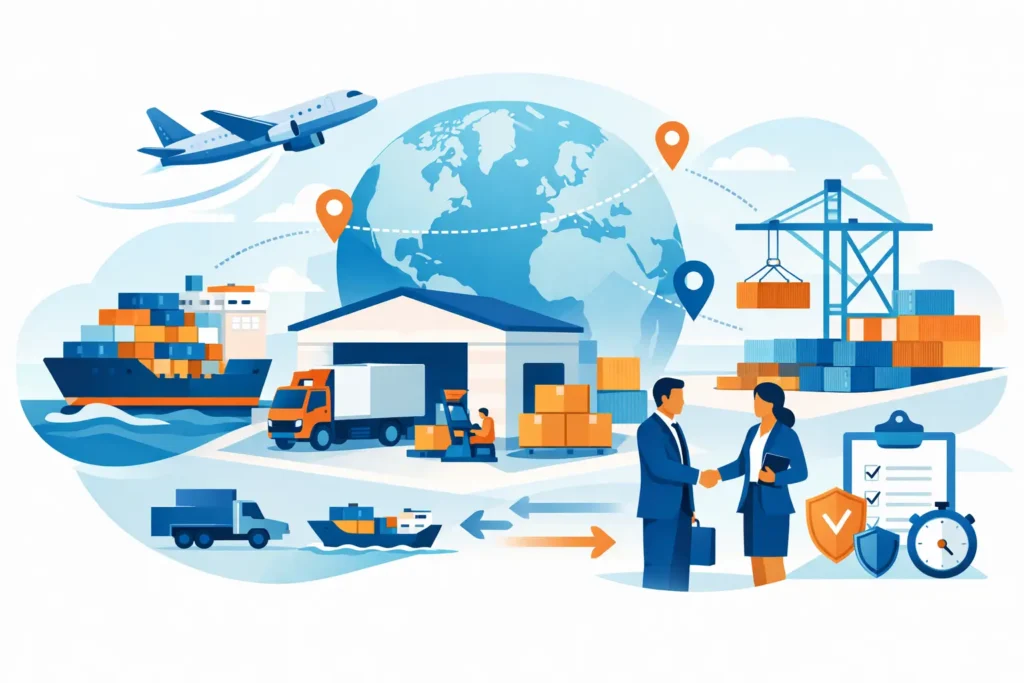
A shipment can be booked on time and still become expensive if the cargo reaches the wrong warehouse, documentation is incomplete, or delivery appointments are missed. For importers and exporters trading through India and the UAE, 3PL logistics support brings the many moving parts of cargo handling under one accountable operational plan.
The value is not simply having another party move cartons or containers. Effective third-party logistics support connects storage, inventory control, freight coordination, customs processes, and final delivery in a way that matches the cargo, route, and commercial deadline. This gives supply chain teams more control over outcomes without having to build every logistics capability internally.
What 3PL Logistics Support Covers
A 3PL provider manages logistics activities on behalf of a business. The exact scope varies by shipment volume, product type, and destination, but it commonly begins once goods are ready for collection and continues until they are delivered to a customer, distributor, project site, or retail location.
For businesses operating between India, the UAE, and international markets, the work may include warehousing, inventory handling, order fulfillment, packing, labeling, domestic transport, freight booking, customs clearance coordination, and delivery management. A provider may also support cargo insurance, consolidation of smaller shipments, or specialized handling for vehicles, machinery, and oversized cargo.
The most useful arrangement is tailored to the actual supply chain. A company importing regular consumer goods may need storage and scheduled distribution. A project contractor may need timed delivery of equipment to a site, with lashing and handling arranged before the vessel arrives. An automotive client may need secure vehicle movement and condition-sensitive handling. These are all logistics needs, but they should not be managed with the same process.
Why Businesses Use 3PL Logistics Support
The immediate benefit is operational capacity. Rather than leasing facilities, recruiting warehouse teams, negotiating with multiple carriers, and monitoring separate service providers, a business can use an experienced logistics partner to coordinate those functions. This is especially practical for companies entering a new market, expanding seasonal stock, or managing trade volumes that rise and fall throughout the year.
Cost control matters as much as capacity. Warehousing space, transport equipment, labor, and freight services create fixed costs when managed entirely in-house. Third-party support can convert part of that commitment into a service model aligned with actual volumes. It does not mean every shipment will be the lowest-priced option. Urgent cargo, special equipment, or remote delivery points can still increase cost. The advantage is clearer planning and the ability to choose the right service level before costs escalate.
Reliability is another reason businesses outsource logistics operations. A dependable 3PL partner works from defined receiving procedures, inventory records, dispatch plans, and proof-of-delivery processes. When freight, customs, warehouse, and transport teams communicate from the same shipment plan, there is less risk of cargo being held because the next step was not arranged.
Better visibility for supply chain decisions
Visibility is valuable only when it helps a team take action. For example, knowing that a container has arrived is useful, but knowing whether clearance documents are ready, whether the cargo has been deconsolidated, and when delivery can be scheduled is far more valuable.
A capable provider should offer clear status updates and a defined point of contact. Supply chain managers need timely answers when customers ask about stock availability, delivery dates, or exceptions. This is particularly important for India-UAE trade lanes, where documentation, port procedures, and local delivery requirements can affect the final schedule.
Flexible support when demand changes
Many businesses do not need the same warehouse space or delivery capacity every month. Seasonal promotions, project deadlines, production cycles, and new market launches can quickly change logistics requirements. A 3PL arrangement allows a company to increase storage, add delivery runs, or coordinate additional freight movements without rebuilding its internal operations each time.
Flexibility still requires planning. Forecasts, purchase orders, product dimensions, and expected arrival dates should be shared early. A logistics provider can only reserve space, equipment, and labor effectively when it receives accurate information from the shipper.
Connecting Warehousing, Freight, and Customs
Logistics performance often breaks down at the handoff between services. Freight may arrive as planned, yet goods cannot leave the port because clearance has not been prepared. Cargo may clear customs, yet the warehouse is not ready to receive it. Stock may be available, yet delivery vehicles have not been scheduled around customer time slots.
This is where integrated support creates a practical advantage. Freight forwarding brings cargo across borders by air, ocean, or road. Customs handling helps ensure the shipment meets applicable import and export requirements. Warehousing provides controlled receiving, storage, and dispatch. Local transport completes the movement to the final destination. Managing these stages through a coordinated plan reduces unnecessary waiting and duplicated communication.
Mass Freight Forwarding supports this approach through freight forwarding, customs clearance, warehousing, and delivery coordination across India, the UAE, and global trade lanes. The objective is straightforward: move cargo safely, on schedule, and with the handling appropriate to its commercial and physical requirements.
Choosing the Right 3PL Partner
Price is a necessary consideration, but it should not be the only one. A low warehouse rate can become costly if inventory accuracy is poor or outbound orders are delayed. Likewise, a low freight quote may exclude handling, documentation, storage, or destination charges that affect the final landed cost.
Start by reviewing the provider’s experience with your cargo and trade lane. Ask how goods are received, counted, stored, picked, packed, and released. Confirm whether the provider can handle your product dimensions, packaging requirements, delivery locations, and required turnaround times. For international cargo, clarify who manages each documentation step and how customs exceptions are communicated.
It is also wise to discuss accountability before the first shipment moves. The operating plan should identify points of contact, cut-off times, inventory reporting frequency, delivery confirmation requirements, and escalation procedures. These details may seem routine, but they determine how quickly a problem is resolved when a container is delayed, an order is short, or a consignee changes a delivery appointment.
For specialized cargo, the questions should go further. Project cargo may require route surveys, lifting plans, permits, and site delivery coordination. Vehicles may require secure loading methods, inspections, and shipping options such as RORO or containerized transport. High-value goods may need additional security controls and cargo marine insurance. The right partner will explain the operational limits clearly rather than promising a standard solution for every shipment.
Building a Strong Working Model
3PL relationships work best when both sides share accurate, usable information. The shipper should provide product details, forecasts, documents, handling instructions, and changes to delivery priorities as early as possible. The logistics provider should return clear schedules, inventory updates, cost details, and exception alerts.
A short operating review at regular intervals can prevent recurring issues. Review inbound delays, stock discrepancies, damage claims, delivery performance, and changes in freight demand. If a certain route is consistently slow or a product requires different packaging, adjust the plan before the next shipment repeats the same problem.
The right logistics support does more than store goods or arrange transport. It gives your team a reliable operating structure for moving cargo across borders and into customers’ hands. When trade volumes grow, products become more specialized, or delivery expectations tighten, that structure can be the difference between reacting to disruptions and staying prepared for them.