
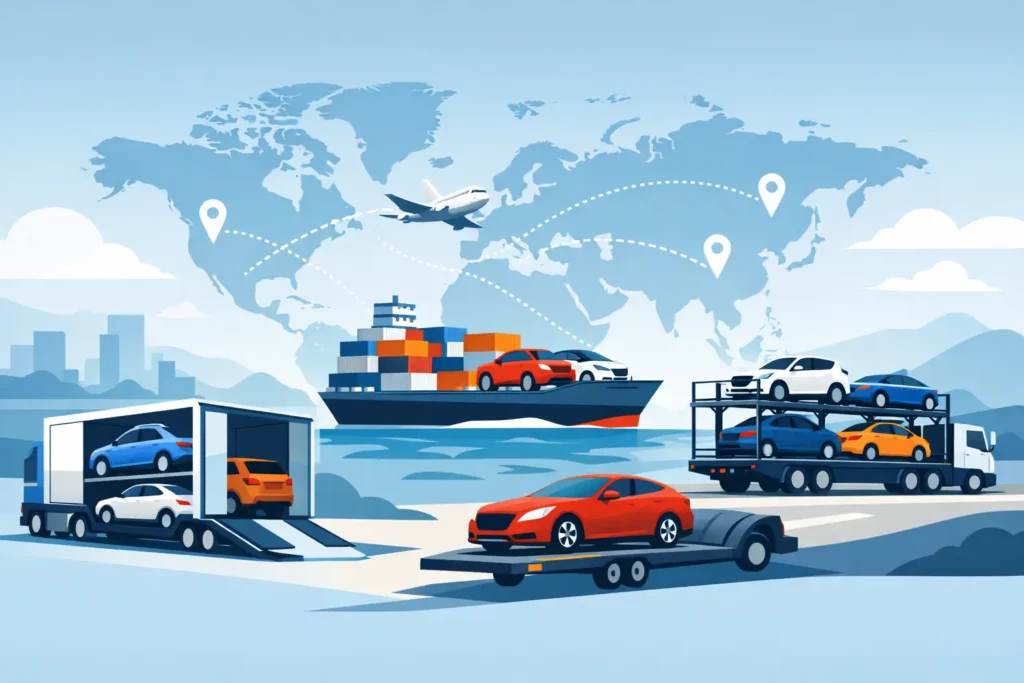
A vehicle shipment can look straightforward until the booking is made under the wrong service. A low-cost RORO shipment may be ideal for a running fleet vehicle, while the same choice could expose a high-value classic car to avoidable risk. The best shipping methods for cars depend on the vehicle’s value, condition, destination, timing, and the level of handling control your business requires.
For importers, exporters, automotive dealers, and supply chain managers moving vehicles to or from India and the UAE, the decision is not simply between sea and air. It is a choice between port access, transit time, customs requirements, loading method, insurance coverage, and total landed cost. The right method protects both the vehicle and the commercial outcome of the move.
How to Choose the Best Shipping Methods for Cars
Start with the shipment profile rather than the freight rate. A new SUV being exported in volume, a non-running auction vehicle, and a luxury vehicle being relocated for a customer should not be planned the same way.
Consider whether the vehicle is operable, how quickly it must arrive, whether it needs protection from weather and port handling, and whether the origin and destination have suitable RORO or container port options. You should also confirm the import rules before booking. Requirements may include proof of ownership, registration or title documents, export approval, import permits, inspection certificates, and tax or duty payments.
For commercial shipments, calculate the full cost of movement. Ocean freight is only one part of the budget. Inland pickup, terminal charges, export documentation, customs clearance, destination handling, storage risk, and final delivery can materially change the total cost.
RORO Shipping for Operable Vehicles
Roll-on/roll-off, usually called RORO, moves vehicles on specialized vessels. Cars are driven onto the ship, secured on vehicle decks, and driven off at the destination port. For standard operable cars moving between ports with regular RORO calls, it is often the most cost-effective ocean option.
RORO works particularly well for manufacturers, dealers, fleet operators, and exporters shipping several vehicles with flexible delivery schedules. It avoids the cost of loading a dedicated container and can offer frequent sailing options on established automotive trade lanes.
The trade-off is protection and control. Vehicles are stored in a ship’s enclosed decks, but they are not sealed inside a private container. They are handled during loading and discharge, and space for accessories is limited. Personal belongings should generally not be left in the vehicle, both for security and because customs rules can prohibit undeclared contents.
RORO also requires the vehicle to start, steer, and brake safely. A non-running, damaged, or heavily modified vehicle may need a different arrangement. Before booking, confirm the carrier’s acceptance rules for battery condition, fuel level, vehicle dimensions, and any special equipment.
Container Shipping for High-Value or Sensitive Cars
Container shipping is the preferred choice when vehicle protection, shipment control, or origin and destination flexibility matter more than the lowest possible ocean rate. The car is secured inside a container using approved lashing and blocking methods, protecting it from external weather and reducing exposure during the ocean transit.
A single 20-foot container commonly accommodates one standard passenger vehicle. A 40-foot container can carry two vehicles in many cases, subject to their dimensions, loading plan, weight limits, and destination regulations. This option is well suited to luxury cars, classic vehicles, electric vehicles requiring careful handling, and vehicles shipped with approved spare parts or commercial accessories.
Shared-container or consolidation options can reduce the cost for a single vehicle when a full container is not required. However, consolidation may involve additional handling, warehouse waiting time, and less control over the departure date. It is a practical choice for cost-sensitive shipments with flexible timing, but it is not always the fastest option.
Containerization also supports a wider range of port pairings than RORO. That can be valuable for trade involving India, the UAE, and destinations where RORO vessel schedules are limited. The service should include a clear loading plan, professional lashing, condition reporting, and cargo marine insurance options appropriate to the vehicle’s declared value.
Air Freight for Urgent and Exceptional Moves
Air freight is the fastest car shipping method, but it is not the standard solution for most vehicles. Its cost is substantially higher than ocean shipping, so it is generally reserved for urgent prototypes, motorsport vehicles, display vehicles, critical replacement units, or exceptionally high-value cars where timing outweighs freight expense.
Air shipping requires detailed planning around aircraft capacity, dimensions, battery safety requirements, dangerous goods rules, and airport handling. A vehicle may need to be partially prepared for air transport, including fuel reduction and battery isolation, depending on carrier requirements.
For a launch event, time-critical repair, or race calendar, the premium can be commercially justified. For normal dealer stock or customer relocation, a container shipment generally provides a far more cost-effective balance of safety and transit time.
Land Transport for Regional Collection and Delivery
Land freight is essential even when the main international leg moves by sea or air. Vehicle carriers, flatbeds, low-bed trailers, and enclosed transporters connect factories, dealerships, ports, warehouses, inspection centers, and final delivery addresses.
Within the UAE and across accessible GCC routes, road transport can be an efficient primary method for regional vehicle movements. Enclosed road transport offers added protection for luxury and collector vehicles, while open carriers are often appropriate for standard commercial stock. For India-UAE trade, land transport normally supports the first and last mile around the ocean or air movement rather than replacing it.
The right inland equipment depends on ground clearance, vehicle height, condition, and value. A non-running vehicle may require winching equipment. Oversized vehicles and specialized equipment may need permits, route surveys, or low-bed transport. These details should be identified before pickup, not at the loading point.
Match the Method to the Vehicle and the Route
There is no single best method for every car shipment. RORO is usually a strong fit for running vehicles, regular port-to-port routes, and cost-focused volume moves. A container is often the better decision for luxury, classic, non-running, or sensitive vehicles, as well as shipments requiring stronger protection and more flexible routing. Air freight is for exceptional urgency, while land freight provides the controlled connection between the vehicle’s actual location and the airport or seaport.
A practical decision should also account for destination infrastructure. If the destination port has no regular RORO service, a container may be the only realistic sea option. If a vehicle must arrive at a remote location after discharge, the savings achieved on ocean freight can disappear without efficient inland delivery planning.
For businesses moving multiple units, it may be sensible to combine methods. Standard fleet vehicles can move by RORO, while premium demonstrators or prototype vehicles travel in containers. This approach controls cost without applying one level of protection to every vehicle.
Customs, Documents, and Condition Control
Shipping method alone does not determine a successful delivery. Customs compliance and document accuracy are equally important. Vehicle details on the commercial invoice, packing list, title or registration, bill of lading, and import declaration must match. Differences in chassis number, engine number, model year, or declared value can lead to delays, inspections, or additional costs.
Before export, confirm the destination country’s rules on vehicle age, steering configuration, emissions, safety standards, and salvage history. A vehicle accepted for export may still be restricted at import. Duties, VAT, registration requirements, and inspection procedures vary by market, including across India, the UAE, and onward global destinations.
A thorough pre-shipment condition report is essential. Record the vehicle identification number, odometer reading, existing scratches or dents, tire condition, and interior condition with dated photographs. Keep the fuel level low in line with carrier rules, remove loose items, secure retractable antennas, and provide all required keys. This record supports transparent handover and helps if an insurance claim is required.
Cargo marine insurance should be evaluated based on the vehicle’s actual value and the coverage terms, not treated as an afterthought. Carrier liability can be limited and may not equal the cost to repair or replace a high-value vehicle. Understanding deductibles, exclusions, and the claims process before departure provides better protection than trying to resolve gaps after arrival.
Build a Car Shipping Plan Around Total Risk
The most effective vehicle shipping plan balances schedule, cost, handling exposure, and customs certainty. It also gives your team one accountable process from collection through final delivery. Mass Freight Forwarding can coordinate car shipping with ocean, air, land transport, customs clearance, lashing, marine insurance, and door-to-door delivery for movements involving India, the UAE, and global markets.
Before committing to a sailing or flight, share the vehicle type, dimensions, operable condition, pickup and delivery points, required arrival date, and declared value. Those details make it possible to select a shipping method that fits the cargo rather than forcing the cargo into the cheapest available service. A carefully planned move keeps the vehicle protected, the paperwork ready, and the delivery timeline realistic.