
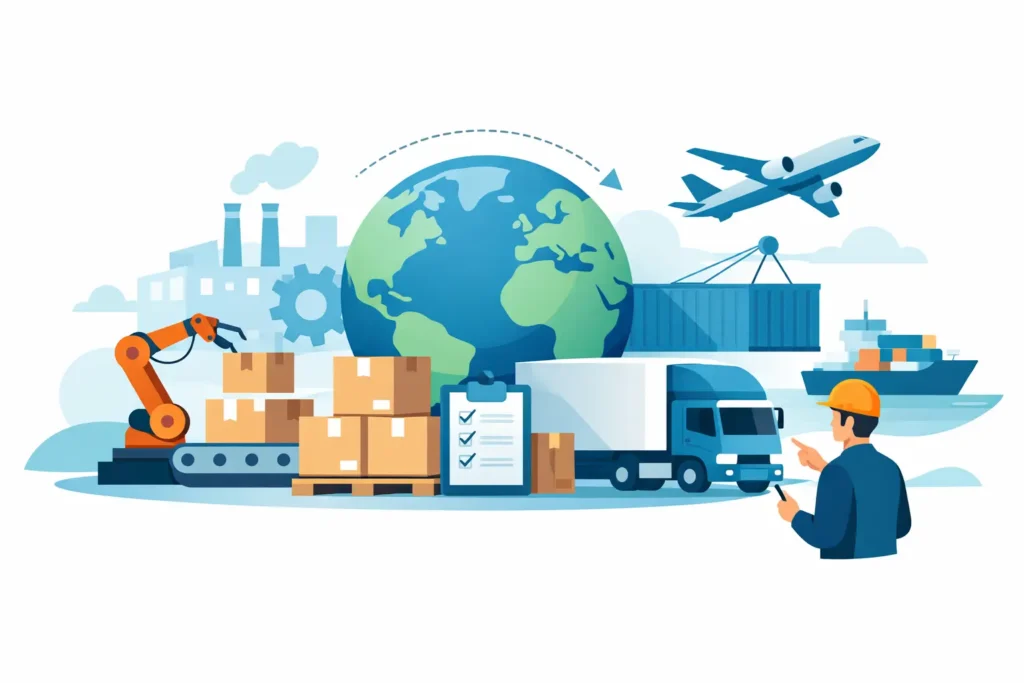
A production line can absorb a late component only for so long. When an imported machine part is held at customs, a container misses a vessel cutoff, or finished goods reach a distributor after a committed delivery date, the effect travels well beyond one shipment. Custom freight solutions for manufacturers are designed to prevent those disruptions by aligning transport, documentation, cargo handling, and delivery schedules with the realities of production.
For manufacturers trading to or from India and the UAE, freight is rarely a simple question of moving cartons from port to port. Cargo may be time-sensitive, heavy, high-value, oversized, regulated, or needed in precise delivery windows. The right forwarding plan accounts for those requirements before the cargo is packed, not after it has been delayed.
Why Standard Freight Plans Often Fall Short
A standard freight quote may show an origin, destination, transit time, and price. That is useful for routine shipments, but it does not always address the operational details that determine whether a manufacturing shipment arrives usable and on time.
Consider a factory importing components from the UAE into India. It may need partial shipments released in sequence to avoid excess inventory, while the balance remains consolidated for better freight economics. Another manufacturer may export finished equipment from India to a global customer and require export packing, cargo lashing, marine insurance, customs clearance, and final-mile delivery coordination. Both need freight support, but they do not need the same plan.
A customized approach starts with the supply chain requirement: what the cargo is, when it is needed, what happens if it is delayed, and which handoffs create risk. From there, the transport mode, routing, documentation, packing standard, and delivery structure can be selected with purpose.
Custom Freight Solutions for Manufacturers Start With Cargo
The cargo profile should drive the logistics plan. Dimensions, weight, commodity classification, packaging, value, handling sensitivity, and regulatory requirements all affect the safest and most cost-effective route.
Choosing the Right Transport Mode
Air freight is often suitable for urgent components, samples, replacement parts, and high-value items where a production stoppage would cost more than the freight premium. It provides speed, but it requires careful control of chargeable weight, airline restrictions, and export or import documentation.
Ocean freight generally supports larger replenishment orders, machinery, raw materials, and finished-goods exports where transit time can be planned into inventory cycles. Full container load shipping can offer better control for consistent volumes, while LCL groupage can be practical for smaller shipments that do not require a full container. The trade-off is that LCL may involve more cargo handling and consolidation time, so it is not always the right option for highly fragile or deadline-critical freight.
Land freight plays a key role in moving cargo between factories, warehouses, ports, airports, and customer locations. For regional supply chains, road transport may be the primary mode. For international moves, it connects the first and final mile. Vehicle type, loading method, delivery appointment requirements, and road permits should be planned in advance, particularly for heavy machinery or unusual dimensions.
Many manufacturers benefit from a multimodal solution. For example, urgent first-batch components can move by air while regular replenishment travels by ocean freight. This split approach can protect production without making every shipment expensive.
Planning for Specialized and Project Cargo
Industrial equipment is not always container-friendly. Presses, generators, production lines, fabricated structures, and other large units may require flat racks, open-top containers, break bulk shipping, or RORO services. They may also need cargo lashing, lifting plans, survey support, route assessments, and specialized trucking.
Project logistics should be planned early, ideally before purchase orders and final packing decisions are locked. A crate designed without considering port equipment, container dimensions, or destination road limits can create avoidable handling costs later. Detailed cargo information allows the forwarding team to identify practical loading methods, assess risk, and build a workable movement schedule.
Customs Compliance Is Part of Delivery Performance
Freight can arrive on schedule and still fail to reach the factory or buyer if the customs entry is incomplete or incorrectly classified. Manufacturers working across India, the UAE, and global markets must manage invoices, packing lists, certificates, import permits where applicable, country-of-origin requirements, and product classification with care.
Customs clearance is not a separate administrative task at the end of shipping. It is a core part of freight planning. The declared commodity description, Harmonized System code, valuation support, and import or export documentation should match the cargo and commercial transaction. Errors can lead to inspections, storage charges, delayed release, or disputes over duty and tax treatment.
The requirements vary by product and trade lane. Electronics, chemicals, machinery, food-related materials, medical goods, and products containing regulated components may require additional checks. A dependable forwarder asks the right questions before pickup and coordinates documentation early, particularly when the shipment is moving on a fixed production or installation deadline.
Building Cost Control Into the Freight Plan
Lowest freight cost and lowest total landed cost are not always the same. A low ocean rate can lose its value if the cargo is poorly packed, misses a cutoff, incurs port storage, or requires expensive corrections at destination. Likewise, shipping every urgent order by air may solve short-term problems while hiding a deeper inventory or planning issue.
Manufacturers should evaluate freight costs alongside handling, packing, customs, insurance, warehousing, delivery, and the cost of delayed production. This broader view makes it easier to choose where speed is worth paying for and where consolidation can produce savings.
There are several practical ways to improve control. Consolidating supplier cargo can reduce the number of small international shipments. Scheduling recurring shipments around known production cycles can create more predictable capacity. Using suitable packaging can reduce damage and prevent excess dimensional weight. Warehousing and 3PL support can also help businesses hold strategic inventory closer to customers or production facilities without overloading the factory floor.
Visibility matters here as well. Shipment updates should help procurement and supply chain teams make decisions before an issue becomes critical. If a vessel rolls, a document is pending, or a delivery appointment must change, early communication gives the business time to adjust production, notify customers, or arrange an alternative.
What a Manufacturer Should Share With Its Freight Partner
A forwarder can only customize a solution when it has a clear picture of the operation. Manufacturers should provide realistic cargo details, including dimensions, weights, packaging type, commodity description, shipment frequency, required delivery date, and any handling restrictions.
It is equally useful to share the business impact of delay. A replacement spare part needed to restart equipment deserves a different service level than stock intended for a flexible warehouse replenishment cycle. The same is true for export shipments tied to customer contracts, trade events, construction projects, or installation teams.
Commercial information should be accurate from the start. Invoices and packing lists should reflect the actual goods, quantities, values, and terms of sale. Last-minute document revisions create risk at the point where time is already most limited.
For recurring trade lanes, regular performance reviews can improve results over time. Looking at transit consistency, customs issues, damage trends, freight spend, and delivery exceptions helps identify where the plan should change. A customized solution is not fixed forever. It should adapt as product lines, shipment volumes, supplier locations, and customer expectations change.
Selecting a Freight Partner for Complex Manufacturing Moves
The right freight partner should be able to manage more than a booking. Look for practical experience with the relevant cargo type, access to air, ocean, and land options, customs capability in the origin and destination markets, and a clear process for handling exceptions.
For India-UAE trade, local operating knowledge on both sides is especially valuable. It helps coordinate pickup, export clearance, carrier handoff, import clearance, and final delivery without leaving the shipper to manage separate providers. Mass Freight Forwarding supports these connected requirements with freight forwarding, customs handling, project cargo coordination, warehousing, and door-to-door services tailored to the shipment.
Ask direct questions before assigning a shipment: Who will manage customs documentation? How will oversized or delicate cargo be secured? What happens if a carrier schedule changes? How often will updates be provided? Clear answers are a sign that the provider understands execution, not just pricing.
The most useful freight plan gives manufacturers room to operate confidently. When transport choices, customs preparation, cargo protection, and delivery timing are aligned before shipping begins, supply chain teams can spend less time chasing exceptions and more time keeping production and customer commitments on track.