
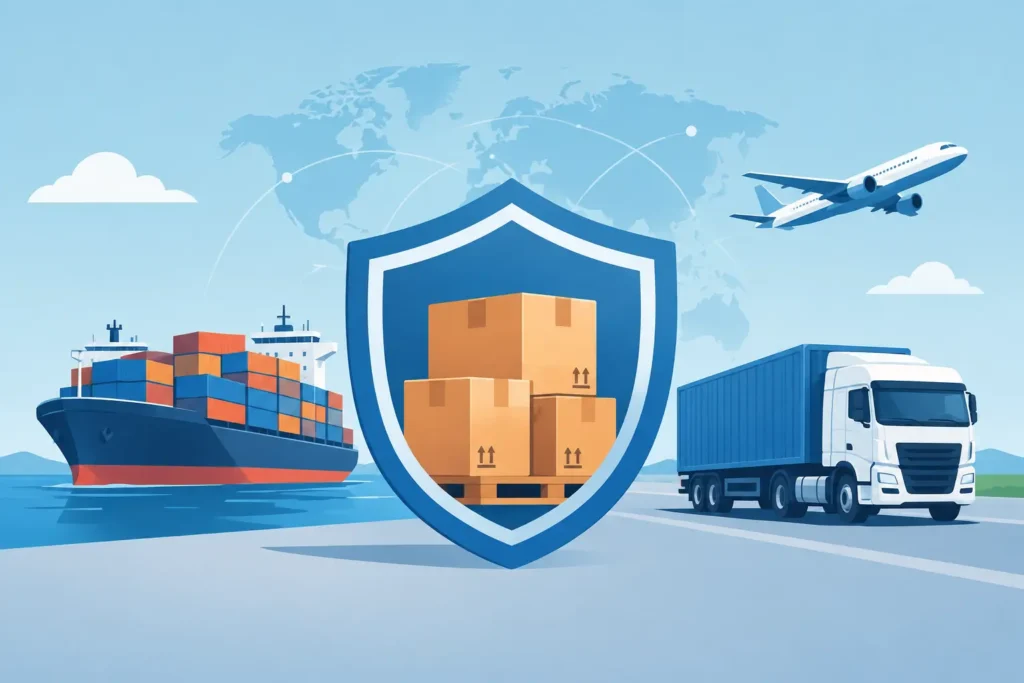
A shipment can be carefully packed, correctly documented, and handed to a reputable carrier, yet still face risks outside anyone’s control. A container may be damaged in rough weather, a truck may be involved in an accident, or cargo may be stolen during a handoff. Freight insurance gives importers, exporters, and supply chain managers a defined financial recovery path when those events affect goods in transit.
For businesses moving cargo between India, the UAE, and international markets, insurance should be part of shipment planning, not an afterthought after a loss. The right cover helps protect the commercial value of the goods, supports faster claims handling, and reduces the financial disruption that can follow a transport incident.
Why carrier liability is not the same as freight insurance
A common assumption is that the carrier, airline, shipping line, or trucking company will fully reimburse cargo if something goes wrong. In practice, carrier liability is usually limited by transport conventions, service terms, and the cause of the loss. The amount payable may be calculated by weight rather than the invoice value of the shipment.
That can create a serious gap. A lightweight shipment of electronics, spare parts, medical equipment, or luxury goods may have a high commercial value but receive only limited compensation under carrier liability rules. The carrier may also deny responsibility when damage resulted from circumstances outside its control.
Freight insurance is designed to protect the cargo owner’s financial interest. Subject to the policy terms, it can cover the declared value of goods and related freight charges when covered loss or damage occurs. It does not replace careful carrier selection, secure packing, or cargo handling controls. It adds protection when those controls are not enough to prevent an unexpected event.
What freight insurance can cover
Coverage depends on the policy type, cargo profile, route, and declared value. Many shippers choose broad all-risk cargo cover for commercial shipments. Despite the name, all-risk cover does not mean every loss is automatically insured. It generally covers accidental physical loss or damage unless an exclusion applies.
For sea freight, cover may respond to risks such as vessel incidents, water damage, collision, fire, theft, and damage during loading or unloading. Air freight policies can address airport handling damage, theft, and loss during air transit. Land freight coverage may apply to accidents, overturning, fire, and theft while goods move between warehouses, ports, airports, and final delivery locations.
A properly structured policy can also be arranged for door-to-door movement. This matters where cargo passes through several parties, such as a manufacturer in India, a port terminal, an ocean carrier, a UAE customs process, local transport, and a consignee warehouse. Each transfer creates another point where loss or damage could occur.
Certain shipments need additional attention. Project cargo, machinery, vehicles, temperature-sensitive goods, high-value electronics, and fragile cargo may require specialized terms. The policy should reflect the real transport plan, including whether goods move by ocean, air, road, RORO, break bulk, or a combination of modes.
Exclusions that deserve a closer look
Insurance works best when the shipper understands what is not covered. Standard exclusions often include normal wear and tear, inherent vice, gradual deterioration, inadequate packing, and damage caused by the nature of the goods themselves. For example, corrosion caused by insufficient moisture protection or spoilage caused by an unapproved temperature setting may fall outside standard cover.
Delay is another area that requires care. Freight insurance usually protects against physical loss or damage, not commercial loss caused solely by a late shipment. If a delayed delivery leads to lost sales, production downtime, or contractual penalties, those consequences are not normally covered unless a specific extension has been arranged, and even then, terms can be limited.
War, strikes, civil unrest, and political risks may also require separate coverage. This can be relevant for cargo moving through sensitive regions or transshipment hubs. Ask about these exposures before shipment, rather than assuming a standard policy includes them.
How to choose the right freight insurance policy
Start with the shipment’s true value. The insured amount should typically consider the commercial invoice value, freight charges, and any agreed uplift for anticipated costs or margin. Underinsuring to reduce the premium can create a larger problem after a claim, particularly if the policy applies an average clause that reduces payment in proportion to the underinsured amount.
Next, match the coverage to the cargo and route. A regular exporter shipping boxed consumer goods from Mumbai to Dubai may need a different arrangement than a contractor moving oversized equipment from the UAE to a construction site in India. The cargo type, packing method, transport mode, transit points, and handling requirements all affect the risk.
Consider whether a single-shipment policy or an annual open cover is more practical. Single-shipment insurance can suit occasional exporters, individuals shipping vehicles, or companies handling a one-time project movement. An annual policy may be more efficient for businesses with frequent shipments because it provides ongoing protection under pre-agreed terms and can simplify administration.
The deductible is another decision point. A higher deductible may reduce the premium, but it leaves the cargo owner responsible for a larger portion of each loss. For high-volume shipments, this may be commercially acceptable. For a single high-value shipment, a lower deductible may provide greater certainty.
Finally, review the policy period carefully. Coverage should align with the full movement of cargo, from the point it leaves the supplier or warehouse through final delivery. A policy limited to port-to-port transit may leave gaps during inland trucking, temporary storage, customs inspection, or delivery to the consignee.
Incoterms affect risk, but they do not replace insurance
Incoterms establish responsibilities between buyer and seller, including when risk transfers during a sale. They do not automatically guarantee that cargo is fully insured. Under CIF terms, for example, the seller is required to arrange insurance, but the required minimum level of cover may not be sufficient for the buyer’s actual exposure.
Under EXW, FCA, FOB, CFR, DAP, or DDP terms, the party carrying the transit risk should verify what insurance is in place and whether it matches the shipment value. This is especially relevant when a transaction includes multiple suppliers, consolidation, customs clearance, or delivery across several jurisdictions.
Clear coordination between procurement, sales, logistics, and finance teams avoids a frequent problem: everyone assumes someone else arranged the coverage. Before dispatch, confirm the insured party, sum insured, policy scope, deductible, and claims contact.
What to do when cargo is damaged or missing
Fast action protects both the cargo and the claim. If damage, shortage, or loss is discovered, record the condition immediately and notify the carrier, freight forwarder, and insurer within the required timeframe. Do not dispose of damaged packaging or goods until the insurer or surveyor confirms that evidence has been captured.
Photographs, delivery receipts, packing lists, commercial invoices, bills of lading or air waybills, and survey reports can all be needed to support a claim. If visible damage is found at delivery, make a written exception on the proof of delivery rather than signing for goods as received in good condition.
You should also take reasonable steps to reduce further loss. Moving wet cargo to a dry area, separating damaged cartons, or arranging secure storage can help preserve value. These actions should be documented, since the insurer may ask what steps were taken after the incident.
Planning cover for India-UAE and global trade lanes
India-UAE cargo movements often combine ocean or air freight with customs procedures and domestic transport at both ends. The physical journey may be short compared with some global routes, but the shipment can still move through busy ports, airports, warehouses, and distribution networks. That makes accurate documentation, suitable packing, and correctly structured insurance essential.
Mass Freight Forwarding can help shippers align cargo marine insurance with the chosen transport mode, cargo value, and delivery plan. The best approach is to discuss insurance while arranging freight, customs clearance, and pickup details, so coverage reflects the actual movement rather than a simplified version of it.
Before your next shipment leaves the warehouse, review its value, route, packing, and transfer points with the same care used to select a freight service. A small insurance decision made before dispatch can protect a much larger commercial relationship after delivery.