
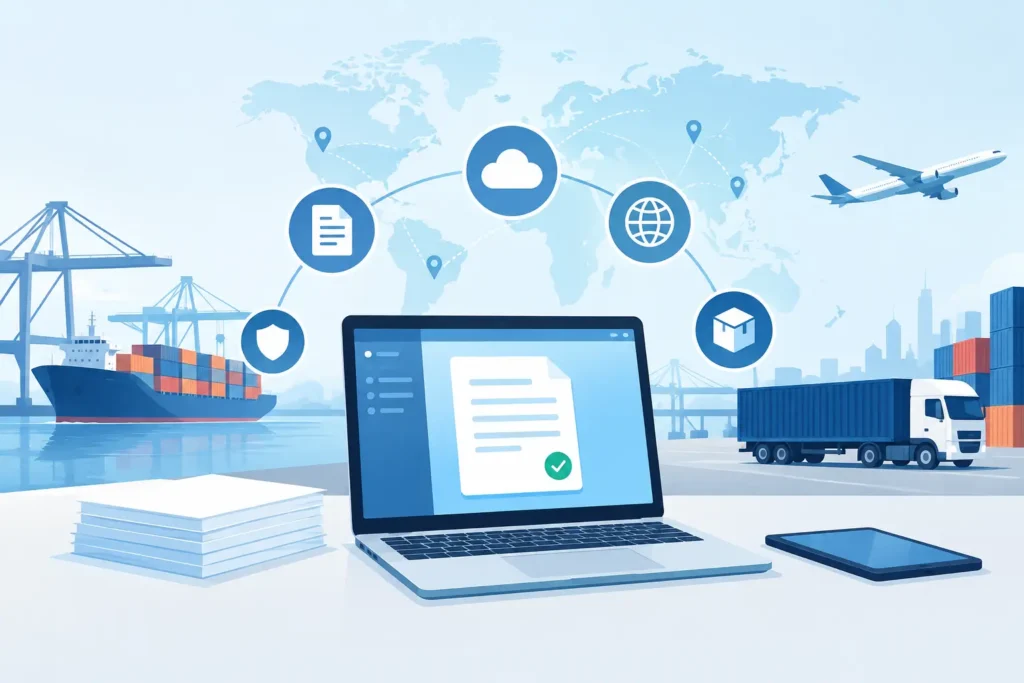
A shipment can be packed, booked, and ready at the port, yet still miss a vessel or sit at a border because one document carries the wrong consignee detail, tariff code, or signature. That is why digital trade documentation trends matter to importers and exporters: they are changing how quickly shipping information is created, checked, shared, approved, and used for customs clearance.
For businesses moving cargo through India, the UAE, and global trade lanes, digital documentation is no longer just an administrative upgrade. It is becoming a practical tool for reducing avoidable delays, improving shipment visibility, and controlling compliance risk. The opportunity is significant, but so is the need for careful implementation. A digital file is not automatically a compliant or accepted trade document.
Digital Trade Documentation Trends That Matter Most
The biggest shift is from sending static documents after a shipment is booked to managing verified trade data throughout the shipment lifecycle. Commercial invoices, packing lists, certificates of origin, bills of lading, air waybills, customs declarations, delivery orders, and insurance records increasingly move through connected systems rather than email chains alone.
This does not mean paper has disappeared. Original documents may still be required for certain cargoes, destinations, banking arrangements, or counterparties. The more realistic trend is a hybrid operating model: digital-first processes with paper controls retained where regulation, carrier practice, or contractual terms require them.
Electronic transport documents are gaining practical ground
Electronic bills of lading and other electronic transport records are among the most closely watched developments in freight. When accepted by all relevant parties, they can reduce courier costs, prevent document loss, and speed up the release of cargo. They can also make ownership transfers and document surrender processes easier to track.
However, adoption depends on the entire transaction chain. The shipper, consignee, carrier, bank, insurer, and local authorities may not operate at the same digital maturity level. For a letter of credit shipment, for example, document wording and presentation rules remain critical whether the file is electronic or printed. Businesses should confirm acceptance requirements before choosing an electronic bill of lading process.
Data quality is becoming more valuable than document volume
A freight file may include ten or more documents, but many of them draw from the same core data: product descriptions, quantities, values, Incoterms, shipper details, consignee details, country of origin, and commodity classifications. The trend is toward entering that information once, validating it early, and using it consistently across freight, customs, finance, and delivery records.
This approach matters because small inconsistencies can create large operational problems. A commercial invoice that describes goods differently from the packing list, or a customs declaration that does not match the bill of lading, can lead to queries, amendments, storage charges, and clearance delays. Standardized master data reduces those risks more effectively than simply converting paper forms into PDFs.
Customs filing is moving earlier in the shipment process
Many customs and border agencies now expect advance cargo information before goods arrive. This places greater pressure on shippers to prepare accurate documentation at the booking stage rather than waiting until cargo reaches the airport, port, or land border.
For shipments between India and the UAE, the right documentation depends on the commodity, shipment value, trade terms, importer registration, applicable duties, and any product-specific permits or certificates. A digital workflow helps teams identify missing information earlier, but it does not replace customs knowledge. Accurate classification, valuation, origin information, and supporting records remain essential.
Why Digital Documents Improve Freight Control
The practical value of digitization is speed with accountability. A centralized document process gives authorized teams access to the latest version of a freight file, rather than relying on attachments forwarded among sales teams, warehouses, brokers, carriers, and overseas partners.
For supply chain managers, this improves exception handling. If customs requests a revised invoice or a consignee needs a copy of the packing list, the document can be found and checked quickly. For exporters, it creates a clearer audit trail of who prepared, reviewed, approved, and sent each file.
Digital documentation can also support more accurate cost management. When freight invoices, customs entries, cargo insurance documents, and delivery records are organized around the same shipment reference, businesses can identify where demurrage, detention, storage, or amendment costs are occurring. This is particularly useful for recurring shipments and multi-country supply chains.
The benefit depends on process discipline. Digitizing disorganized paperwork simply produces disorganized digital paperwork faster. Companies should first define document ownership, approval points, naming conventions, retention periods, and escalation procedures for discrepancies.
Automation and AI Need Human Review
Document automation tools can extract information from invoices, populate shipment templates, flag missing fields, and compare data across records. These capabilities can reduce repetitive manual work, especially for businesses processing high volumes of similar shipments.
AI-assisted checks can also help identify unusual commodity descriptions, value discrepancies, or incomplete consignee data. Used properly, these tools give documentation teams more time to focus on exceptions and commercial decisions.
But automation should not be treated as a substitute for freight and customs expertise. A system may read text accurately while still misunderstanding whether a product description is sufficient for customs purposes or whether a certificate is needed for a restricted item. Human review remains necessary for high-value cargo, regulated goods, project shipments, vehicle movements, and transactions with complex payment terms.
The right approach is risk-based. Automate repeatable work, establish approval thresholds, and ensure experienced personnel review exceptions before cargo is handed over or declarations are filed.
Cybersecurity Is Part of Documentation Compliance
As trade files become more digital, they become more attractive targets for fraud. Criminals may alter bank details on invoices, impersonate suppliers, request changes to delivery instructions, or send convincing-looking document amendments by email.
Businesses should treat document security as an operational requirement, not only an IT concern. Access to shipping files should be based on job role, sensitive records should be protected, and changes to payment or delivery instructions should be verified through an independent contact method. Version history and approval records are especially valuable when a dispute arises.
There is also a retention consideration. Customs, tax, and commercial requirements may require records to be kept for specific periods. A document system should make records searchable and retrievable without allowing unauthorized changes. Cloud storage can be useful, but only when access controls, backup practices, and data-location requirements are understood.
How Importers and Exporters Should Prepare
Start by mapping the documents required for each trade lane and cargo type. A general cargo export may need a commercial invoice, packing list, transport document, and customs paperwork, while automotive cargo, food products, chemicals, or oversized project equipment may need additional permits, inspection records, or specialized certificates.
Next, identify where data is repeatedly entered by different people. Those are the points most likely to create inconsistencies. Build a controlled source of shipment data for product descriptions, weights, dimensions, values, origin details, and party information. Review this information before booking, not after the cargo is already in transit.
It is equally important to agree on responsibilities with freight forwarders, customs brokers, overseas agents, and consignees. Clarify who prepares each document, who validates it, which version is final, and how amendments will be handled. For time-sensitive air freight and port shipments, this clarity can prevent missed cutoffs and expensive last-minute corrections.
Mass Freight Forwarding supports customers with freight coordination and customs-focused documentation handling across India, the UAE, and international lanes. The objective is not to add more paperwork to a shipment. It is to ensure the right information is available at the right point in the cargo journey.
The Direction of Travel Is Clear, but Adoption Will Vary
Digital trade documentation will continue to move toward connected data, electronic records, earlier customs submissions, and stronger audit trails. Still, adoption will not be identical across countries, carriers, banks, and industries. A practical strategy accounts for both digital capability and the paper or original-document requirements that may remain.
Before your next shipment, review one recent freight file from booking through delivery. Look for duplicate data entry, inconsistent descriptions, unclear approvals, and documents prepared too late. Those small gaps are often the best place to begin building a faster, safer, and more reliable trade documentation process.