
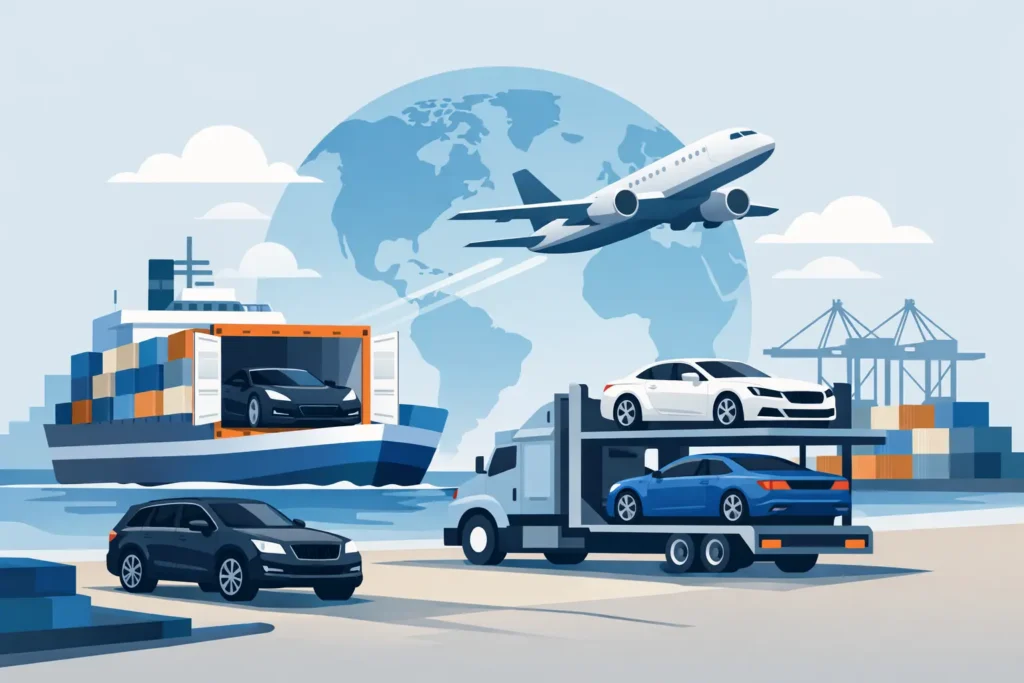
A luxury vehicle is not routine cargo. A small loading error, an unsecured accessory, a delayed customs document, or poor handling at a port can create costs far beyond the transport rate. Luxury car shipping services are designed to control those risks through suitable equipment, careful documentation, trained handling, and clear coordination from collection to delivery.
For importers, exporters, dealerships, relocation clients, and automotive businesses moving vehicles to or from India and the UAE, the right shipping plan depends on more than the vehicle’s value. The make, condition, destination regulations, delivery deadline, and level of protection required all affect the best transport method.
What Luxury Car Shipping Services Should Cover
High-value cars require a shipment plan built around condition protection and accountability. This starts before the vehicle reaches the port. A professional forwarder confirms the vehicle specifications, documents its pre-shipment condition, arranges collection where required, and selects the transport method that matches the route and risk profile.
The work continues through export clearance, terminal handling, international transport, import customs procedures, and final delivery. Each handoff matters. A vehicle may be fully operational yet still need special instructions for low ground clearance, non-standard dimensions, limited battery charge, or high-value accessories.
For commercial shippers, this level of planning also protects delivery commitments. A dealership importing limited-production vehicles or a company relocating executive vehicles needs reliable arrival forecasts, correct paperwork, and quick resolution if a customs or carrier issue arises. The lowest quoted freight rate is rarely the best value if it excludes key handling, documentation, or destination support.
Enclosed Container Shipping
Container shipping is often the preferred choice for premium, classic, collector, and high-performance vehicles. The car is loaded into a dedicated container or, where appropriate, shared container space, then secured with approved lashing and wheel restraints. The enclosed environment provides stronger protection from weather, dust, salt exposure, and unnecessary contact during the ocean journey.
A dedicated container offers the highest degree of control and may be appropriate for exceptionally valuable vehicles, multiple vehicles from the same exporter, or shipments requiring additional accessories and parts to travel under a coordinated plan. Shared container shipping can reduce costs, but schedules may depend on consolidation volumes and can take longer to finalize.
Container transport is not automatically the answer for every shipment. It generally costs more than roll-on/roll-off shipping and requires competent loading, lashing, and terminal coordination. For a vehicle with low clearance or specialized bodywork, the loading plan should be confirmed before cargo reaches the warehouse or port.
RORO Shipping for Suitable Vehicles
Roll-on/roll-off, commonly called RORO, moves operable vehicles onto and off a purpose-built vessel. It can be a practical and cost-effective option for standard luxury vehicles traveling on established trade lanes, especially when the shipper has flexible timing and the vehicle does not require container-level protection.
The main trade-off is exposure. Although RORO vessels are designed for vehicle carriage, cars are handled at origin and destination terminals and are not enclosed in an individual container. Shippers should also verify carrier rules on personal belongings and loose items, which are generally restricted. RORO may work well for dealer stock and regular vehicle movements, while collector cars, prototypes, and ultra-high-value vehicles may justify container transport instead.
Air Freight for Time-Critical Movements
Air freight is a specialized option for racing vehicles, launch events, executive relocations, and urgent replacement shipments. It offers speed, but it comes with substantially higher costs and stricter aircraft, dangerous goods, and airport handling requirements. Fuel levels, batteries, vehicle dimensions, and crate or pallet arrangements must be reviewed carefully.
For most luxury car shipments between the UAE, India, and global markets, ocean freight provides a more balanced cost and transit solution. Air freight is best reserved for cases where the commercial value of speed clearly outweighs the freight premium.
Documentation and Customs Can Decide the Delivery Date
A carefully loaded vehicle can still be delayed by incorrect paperwork. Customs requirements differ by country and can change based on the vehicle’s age, origin, ownership, engine type, declared value, and intended use. Imports may be subject to duties, taxes, registration rules, conformity requirements, or restrictions on used vehicles.
A complete file commonly includes the following documents:
- Commercial invoice or purchase invoice showing the correct vehicle value
- Bill of lading or air waybill issued for the shipment
- Certificate of title, registration, or export certificate, as applicable
- Packing details and vehicle identification number information
- Identification, authorization, or importer documentation required at destination
The exact requirements vary. A vehicle being permanently imported into India will not necessarily follow the same process as a temporary entry, re-export, or shipment into the UAE. Businesses should confirm destination rules before booking space, not after the vehicle is already in transit.
Accurate valuation is particularly important. Under-declaring a luxury vehicle can trigger customs queries, penalties, delays, or insurance complications. Clear invoices, ownership records, and a consistent description across all shipping documents help reduce unnecessary examination and clearance issues.
Protecting Vehicle Condition Before, During, and After Transit
Condition reporting should be treated as part of the shipping process, not an optional extra. Before collection, photograph the exterior from all angles, capture the odometer reading, note existing scratches or dents, and record the condition of wheels, glass, interior surfaces, keys, and accessories. This creates a reference point for every party involved in the movement.
The vehicle should be clean enough for inspection but should not contain personal belongings unless the transport method and destination rules expressly permit them. Loose objects can shift in transit, cause damage, and create customs complications. Alarms should be managed according to carrier instructions, and the fuel level must meet the applicable safety requirements.
Cargo marine insurance deserves equal attention. Carrier liability is often limited and may not reflect the vehicle’s full market value. A suitable policy should be reviewed for insured value, deductible, covered risks, exclusions, loading and unloading coverage, and the claims procedure. It depends on the vehicle and route, but high-value shipments generally benefit from insurance arranged specifically for the declared vehicle value rather than relying only on standard carrier terms.
Choosing a Forwarder for High-Value Vehicle Movements
Luxury vehicle transport requires more than access to a shipping line. The forwarder should be able to explain the proposed transport method, who handles the vehicle at each stage, what is included in the rate, and which costs could arise at destination. Clear answers matter because port storage, inspections, customs duties, inland delivery, and demurrage can change the final cost if planning is incomplete.
Look for experience with containerized vehicles, RORO operations, customs clearance, marine insurance coordination, and inland transport. For India-UAE trade lanes, local operational knowledge at both ends can make a meaningful difference when documents need correction, a shipment requires inspection, or delivery timing changes.
Shipment visibility is also valuable, but updates should be useful rather than vague. A good logistics partner provides key milestones: collection, port arrival, export clearance, vessel departure, transshipment where applicable, destination arrival, customs status, and final delivery scheduling. For recurring automotive imports or exports, this reporting can support inventory planning and customer communication.
Plan the Shipment Around the Vehicle, Not Just the Rate
A luxury car may be a personal possession, dealer inventory, a collectible asset, or a business-critical vehicle. Those uses call for different decisions on transport mode, insurance level, transit speed, and delivery handling. Request a quote with the vehicle make, model, year, VIN, condition, dimensions if modified, origin, destination, and preferred delivery timeline so the freight plan reflects the actual shipment.
Mass Freight Forwarding can coordinate vehicle shipping with freight forwarding, customs support, cargo insurance, and door-to-door delivery planning across India, the UAE, and international trade lanes. The practical goal is simple: give a high-value vehicle the protection, documentation, and attention it needs before it begins moving.