
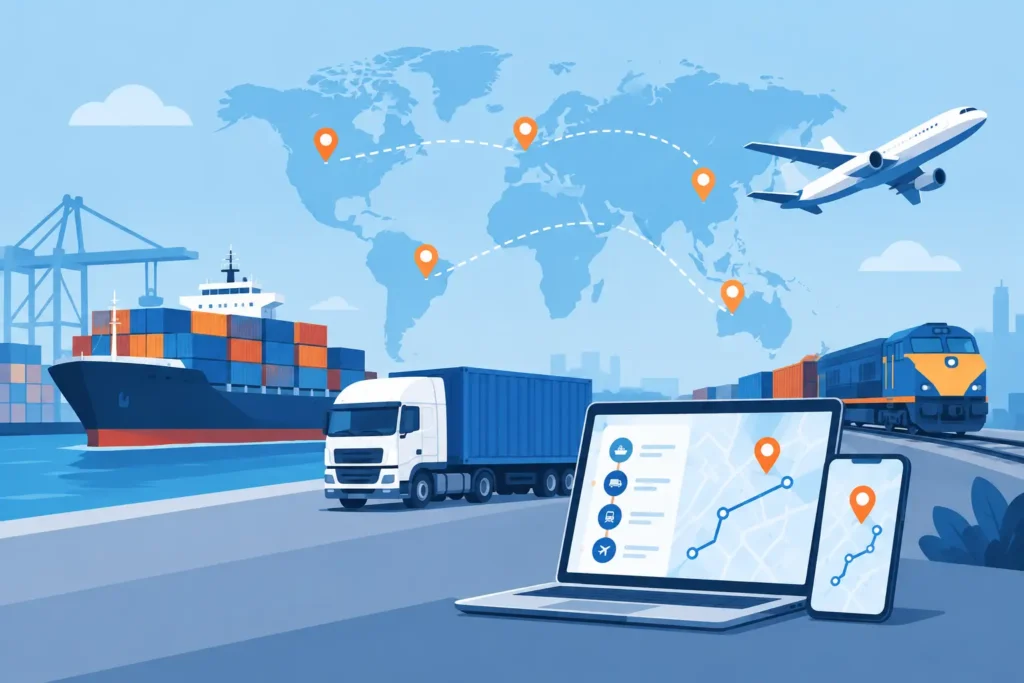
A container can be loaded correctly, documented correctly, and booked on the right vessel, yet still create problems if no one can confirm where it is when plans change. Cargo tracking solutions give importers, exporters, and supply chain managers the visibility needed to make decisions before a delayed flight, port hold, customs query, or missed connection becomes an expensive disruption.
For businesses shipping between India, the UAE, and international markets, tracking is not simply about viewing a location on a screen. It is about knowing the status of the shipment, understanding what may affect its delivery, and having an experienced logistics partner ready to act when exceptions occur.
What Cargo Tracking Solutions Should Tell You
A useful tracking process goes beyond a shipment reference number. It should provide clear status updates at meaningful stages of the journey: cargo collection, warehouse receipt, export customs clearance, departure, transshipment, arrival, import clearance, and final delivery. The exact milestones vary by mode of transport, but the objective remains the same: reduce uncertainty.
For air freight, shippers often need confirmation that cargo has been accepted by the airline, loaded on the planned flight, departed, arrived, and been released for delivery. Ocean freight requires a wider view because sailing schedules, port congestion, transshipment connections, and container release procedures can all affect the final delivery date. Land freight tracking may involve vehicle dispatch details, border clearance progress, and proof of delivery.
The best cargo tracking solutions also distinguish between an estimated event and a confirmed event. A projected vessel arrival is helpful for planning, but it is not the same as confirmation that the container has discharged, cleared customs, and is ready for collection. That distinction helps procurement and warehouse teams plan with realistic expectations.
Why Shipment Visibility Matters in India-UAE Trade
India and the UAE are connected by active commercial trade flows, including consumer goods, industrial equipment, automotive cargo, textiles, food products, machinery, and project shipments. These movements often involve several parties: suppliers, buyers, freight forwarders, carriers, customs brokers, warehouse teams, transport providers, and banks handling trade documentation.
Without timely information, each party may work from a different assumption. A buyer may plan inventory around an arrival date while customs documents are still awaiting confirmation. A warehouse may allocate receiving space for cargo that has not yet been released. A manufacturer may face a production interruption because a critical component is delayed at a transshipment port.
Visibility allows teams to coordinate earlier. If an ocean freight shipment is likely to arrive late, an importer can adjust receiving schedules, inform customers, review alternative stock, or prepare onward transportation around the revised date. If an export document requires correction before cargo departure, the issue can be addressed before it causes a longer customs delay.
Tracking Is Most Valuable When Something Changes
Most shipments follow the expected route without major intervention. The real value of tracking becomes clear when a shipment does not move as planned.
Weather disruption, vessel rollover, flight cancellation, port congestion, customs inspection, incomplete paperwork, damaged packaging, or a delayed truck appointment can affect transit time. No tracking platform can eliminate every disruption. What it can do is provide early warning, allowing the responsible team to investigate and respond.
This is where automated notifications and operational support should work together. An alert that states a shipment is delayed is useful. An update that explains the cause, the likely impact, the available next step, and the revised delivery plan is far more valuable. For time-sensitive freight, the difference may determine whether a business can avoid production downtime, demurrage exposure, or a missed customer commitment.
The Right Level of Tracking Depends on the Cargo
Not every shipment requires the same level of monitoring. A standard LCL shipment of non-urgent commercial goods may need milestone updates and accurate arrival information. A high-value automotive shipment, urgent spare part, temperature-sensitive product, or oversized project cargo may require closer coordination and more frequent communication.
Project logistics is a clear example. When moving heavy machinery or out-of-gauge equipment, tracking should cover more than the main sea or air leg. It may include packing completion, cargo lashing, equipment positioning, permits, port handling, route surveys, customs clearance, and final-site delivery. A delay at one stage can affect cranes, labor, site access, and installation schedules.
Similarly, vehicle shipping requires attention to the chosen transport method. RORO cargo, containerized vehicles, and luxury car movements have different handling and documentation requirements. Tracking should be paired with clear updates on vessel departure, port arrival, inspection or clearance requirements, and local delivery arrangements.
Data Alone Does Not Solve a Logistics Problem
Technology improves visibility, but logistics remains an operational service. Shipment data can show that a container is at a port, yet it cannot by itself resolve a customs discrepancy, obtain a missing document, arrange a delivery slot, or confirm whether cargo has been released to the nominated transporter.
That is why businesses should assess cargo tracking solutions as part of a larger freight forwarding capability. The provider should understand the cargo, the route, the shipping mode, the documentation requirements, and the commercial priority of the shipment. Tracking information must be supported by people who can communicate clearly with carriers, customs authorities, warehouses, and delivery partners.
For shipments to and from India and the UAE, customs knowledge is particularly important. A cargo status may indicate that a shipment has arrived, but clearance can depend on correctly prepared invoices, packing lists, certificates, permits, tariff classification, and other shipment-specific requirements. Reliable updates should identify whether cargo is in transit, awaiting documentation, under customs review, cleared, or ready for delivery.
Choosing a Freight Partner for Better Visibility
When comparing freight forwarding providers, do not focus only on whether they offer tracking. Ask how they manage communication when there is an exception and who owns the follow-up from origin to destination.
A dependable provider should be able to explain the expected shipment milestones before cargo moves. They should provide an appropriate reporting frequency based on the cargo and service level, rather than sending generic updates that do not help your team act. They should also be transparent about estimated transit times, possible routing risks, and any factors outside their direct control.
It is also worth asking how tracking connects with related services. If your forwarder manages customs clearance, warehousing, cargo insurance, final-mile delivery, or 3PL support, the information flow can be more coordinated than when each part of the movement is handled by a separate provider. This does not mean one provider is always the right choice. Specialized requirements may call for multiple partners. However, a single accountable point of contact can reduce handoffs and prevent communication gaps.
Mass Freight Forwarding supports customers with coordinated freight movement and shipment updates across air, ocean, and land freight services, alongside customs handling and destination delivery support. For regular trade lanes, this coordinated approach helps businesses plan shipments with greater confidence and respond quickly when conditions change.
How to Use Tracking Information More Effectively
Tracking becomes more useful when it is connected to internal planning. Procurement teams can use estimated arrival information to manage purchase orders. Inventory managers can prepare warehouse capacity. Sales teams can set realistic delivery expectations. Finance teams can follow documentation and release milestones that affect payment or clearance activities.
Create clear internal ownership for shipment updates. For example, one team member may monitor departure and arrival events, while another handles customs documents and a third coordinates final delivery. This avoids the common situation where everyone assumes someone else is following the cargo.
For recurring shipments, review tracking records over time. If a specific route frequently experiences transshipment delays, if a port causes repeated clearance issues, or if certain cargo types require more document corrections, the pattern can guide better routing and booking decisions. Visibility is not only a tool for the current shipment. It can improve the next one.
A Practical View of Cargo Control
No international shipment can be made entirely risk-free. Carrier schedules change, inspections occur, and external conditions can affect every mode of transport. The goal of cargo tracking is not to promise perfect predictability. It is to give your business timely, accurate information and a clear path to action.
When tracking is supported by capable freight operations, customs expertise, and responsive communication, it becomes a practical control point for your supply chain. The result is not just knowing where cargo is. It is having the confidence to plan what happens next.