
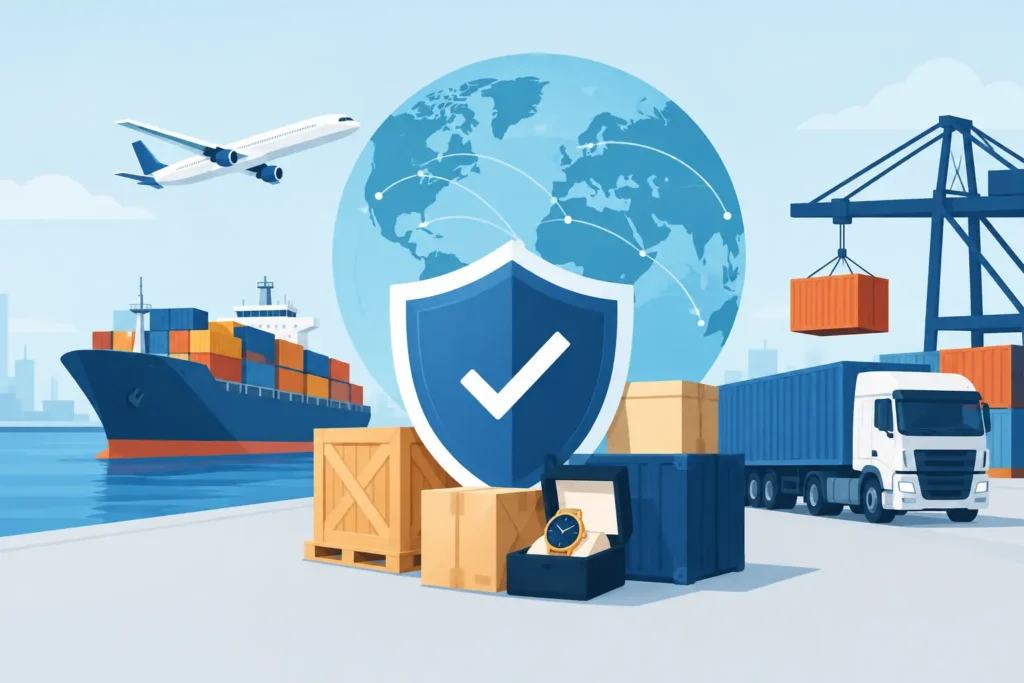
A single damaged pallet of electronics, a delayed luxury vehicle, or a wet container of precision equipment can turn a profitable shipment into a major financial loss. When you insure high value cargo, the objective is not simply to buy a policy. It is to protect the commercial value of a shipment across every handoff, from collection and export clearance to transit, import formalities, and final delivery.
For importers, exporters, and supply chain managers moving goods through India, the UAE, and international trade lanes, cargo insurance should be planned alongside the freight route. The right cover depends on the cargo, its declared value, the sales terms, the mode of transport, and the controls in place during handling and storage.
What Cargo Insurance Is Designed to Protect
Cargo insurance provides financial protection when insured goods are physically lost or damaged during transit. Depending on the policy terms, it may respond to risks such as collision, overturning, fire, theft, water damage, rough handling, and certain general average events in ocean freight.
This is different from a carrier’s liability. Airlines, ocean carriers, trucking companies, and freight providers may have limited liability under their transport terms or international conventions. That limit can be far below the invoice value of specialized machinery, medical equipment, jewelry, automotive parts, or high-end consumer goods. A carrier’s responsibility can also depend on proving fault.
Cargo insurance is intended to address the value at risk under the agreed policy conditions. It gives the cargo owner a clearer route to recovery when a covered incident occurs, rather than relying solely on limited carrier compensation.
How to Insure High Value Cargo Across Borders
High-value shipments need a policy that follows the actual movement of goods, not a simplified version of it. A shipment from a supplier in India to a consignee in the UAE may involve inland pickup, warehouse loading, port handling, ocean or air transit, customs clearance, and final-mile delivery. Each stage creates a possible exposure.
Start by defining where responsibility begins and ends. Some policies are arranged on a warehouse-to-warehouse basis, while others may only apply during a narrower part of the transit. If goods will be stored before export or held after arrival because of customs inspections, documentation issues, or delivery scheduling, confirm whether the policy covers those periods and for how long.
The chosen transport mode also matters. Air freight generally reduces transit time and may reduce exposure to some risks, but it does not remove the possibility of handling damage, misrouting, theft, or temperature-related loss. Ocean freight can be cost-effective for larger volumes, yet it introduces longer transit times, container exposure, weather risks, and potential general average contributions. Road movements require attention to route security, vehicle standards, and overnight parking controls.
For recurring shipments, an open cargo policy can be more practical than arranging insurance shipment by shipment. It can provide ongoing coverage within agreed limits and conditions, provided declarations are made accurately. For occasional project cargo, luxury vehicle shipping, or a one-time high-value export, a specific policy may offer better control over the declared route and cargo details.
Set an Accurate Insured Value
Underinsurance is one of the most avoidable problems in a claim. The insured value should usually reflect more than the supplier’s product price. Consider the commercial invoice value, freight charges, insurance premium, duties where applicable, and a reasonable allowance for anticipated profit or incidental costs if permitted by the policy.
The correct basis varies by contract and policy wording. The key is that the declared amount should reasonably reflect the financial impact if the shipment is a total loss. Declaring a lower value to reduce premium may result in a reduced settlement, particularly where an average clause applies.
Keep the commercial invoice, packing list, purchase order, valuation records, serial numbers, and product specifications readily available. For used machinery, collectible items, vehicles, or specialized equipment, independent appraisals and condition reports can be just as valuable as the invoice.
Read the Coverage Terms Before Cargo Moves
Many businesses ask for “all-risk” cover and assume it means every loss is insured. In cargo insurance, broad cover is valuable, but it still contains exclusions, conditions, and deductibles. Policy wording matters more than the label.
Common exclusions may include loss caused by inadequate packing, inherent vice, ordinary leakage, delay, insolvency of certain parties, willful misconduct, wear and tear, or war and strike risks unless separately included. Temperature-sensitive goods may require specific temperature-control provisions. Theft coverage may be subject to security requirements for vehicles, parking, seals, or approved warehouses.
Packaging deserves particular attention. A policy may not respond if the goods were insufficiently packed for the transport method used. Heavy industrial equipment needs suitable blocking, bracing, lashing, and moisture protection. Electronics may require shock-resistant inner packaging, desiccants, and tamper-evident sealing. High-value vehicles should be inspected, photographed, and secured according to the selected shipping method, whether containerized, RORO, or specialized transport.
Trade terms also affect who should arrange insurance. Under CIF or CIP terms, the seller generally has an obligation to arrange a stated level of cover. Under EXW, FCA, FOB, or similar terms, the buyer may assume transit risk earlier. However, the Incoterm does not replace a review of the insurance policy. Businesses should confirm who is insured, who can make a claim, and whether the cover matches the agreed risk transfer point.
Reduce the Chance of Loss Before It Happens
Insurance supports business continuity, but prevention remains the better outcome. High-value cargo should move through a documented handling plan that identifies the cargo’s vulnerabilities and assigns responsibility at every stage.
Use clear marks and labels without unnecessarily advertising the value of the contents. Apply numbered seals to full-container loads and record seal numbers on shipping documents. For sensitive or theft-prone goods, consider GPS tracking, geofencing, escorted road transport, approved secure yards, and delivery only against verified identification.
Visibility also protects claims rights. Ask for shipment milestones, container or vehicle details, loading photographs where appropriate, and prompt notice of exceptions. If a container arrives with a broken seal, visible damage, wet packaging, or signs of mishandling, record the condition before unloading whenever possible. A clean delivery receipt can make a later claim more difficult to support.
A capable freight forwarder can coordinate transport, customs handling, warehousing, and specialized cargo controls so that risks are not lost between separate providers. Mass Freight Forwarding supports customers moving cargo between India, the UAE, and global markets with logistics planning built around the shipment’s actual requirements.
Protect Your Position if Damage Occurs
A cargo claim is easier to manage when action is taken immediately. Notify the carrier, freight forwarder, and insurer or broker as soon as damage, shortage, or loss is discovered. Do not dispose of damaged goods or packaging until the insurer has confirmed the next step, unless safety requires it.
Document the condition with dated photographs and video. Retain delivery receipts, survey reports, invoices, packing lists, bills of lading or air waybills, customs records, correspondence, and repair or replacement quotations. If damage is visible at delivery, note it specifically on the receipt rather than signing without exception.
There is a balance to manage: cargo owners should mitigate further loss by protecting recoverable goods, but they should not repair, discard, or sell affected cargo without preserving evidence and seeking instructions. Quick, accurate communication helps insurers assess the event and helps logistics partners identify whether a carrier recovery is possible.
The best time to arrange cover is before the booking is confirmed and the cargo begins moving. Match the policy to the real shipment, document its value and condition, and build practical security controls into the route. That preparation protects more than a consignment – it protects delivery commitments, customer relationships, and the cash flow behind your trade.