
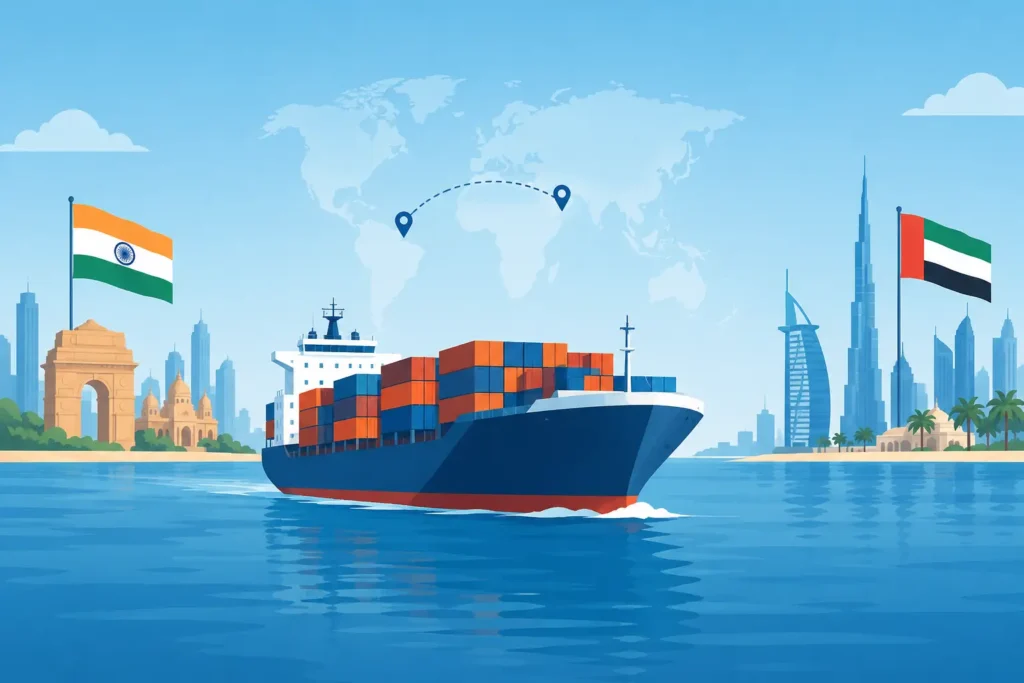
A container can leave Nhava Sheva, Mundra, Jebel Ali, or another major port on schedule and still create costly problems if the paperwork, cargo preparation, or destination plan is not ready. Effective container shipping is not simply booking space at sea. It is the coordination of cargo, equipment, export formalities, vessel schedules, customs requirements, and final delivery under one practical shipping plan.
For importers, exporters, and supply chain managers moving cargo to or from India and the UAE, the right approach reduces delays, protects product condition, and gives teams better control over landed cost. The best shipping option depends on what is being moved, how much space it requires, how quickly it is needed, and what happens after it reaches the destination port.
What Container Shipping Covers
Container shipping is the movement of cargo in standardized steel containers by ocean freight, often combined with inland trucking, customs clearance, warehousing, and delivery to the consignee. A container may travel from a factory in India to a UAE warehouse, from a UAE supplier to a customer overseas, or between global ports through transshipment hubs.
The ocean leg receives the most attention, but it is only one part of the shipment. A complete movement can include collection from the shipper, packing or loading supervision, export customs filing, port handling, ocean freight, import clearance, container release, and delivery or de-stuffing at the final location. If one stage is overlooked, container detention, storage charges, missed delivery appointments, or customs holds can follow.
India and the UAE are major trade centers with frequent vessel connections, but schedule frequency does not eliminate operational risk. Port congestion, equipment availability, documentation errors, and changing customs requirements can affect even routine cargo. Working from a clear plan before cargo is collected is usually less expensive than solving issues after the container reaches port.
Choosing Between FCL and LCL Shipping
The first decision is whether the shipment should move as full container load, or FCL, versus less than container load, or LCL.
FCL means one shipper uses an entire container. Common sizes include 20-foot and 40-foot dry containers, with 40-foot high-cube containers providing additional internal height for lighter, higher-volume cargo. FCL can be a practical choice when cargo volume is substantial, when goods require better separation from other shipments, or when direct loading at the shipper’s facility improves handling control.
LCL combines cargo from multiple shippers into a shared container. It can lower the entry cost for smaller consignments because the shipper pays for the space used rather than an entire container. However, LCL normally involves consolidation and deconsolidation at origin and destination warehouses. That means more handling points and, in many cases, a longer total transit time than FCL.
The lowest freight quote is not always the lowest total cost. A shipment that nearly fills a container may be more economical as FCL once origin handling, destination charges, cargo handling, and delivery timing are considered. LCL may remain the right choice for regular smaller orders, test shipments, or inventory programs that prioritize cash flow over container utilization.
Equipment Must Match the Cargo
A standard dry container works for many palletized consumer goods, textiles, machinery parts, and general commercial cargo. Other cargo needs different equipment. Refrigerated containers maintain controlled temperatures for eligible food, pharmaceutical, and temperature-sensitive products. Open-top or flat-rack equipment may be required for cargo that exceeds standard container dimensions. Dangerous goods require approved packaging, declarations, labels, and carrier acceptance before loading.
Container type should be selected early. Last-minute equipment changes can affect vessel bookings, packing arrangements, and freight rates. For heavy cargo, weight distribution matters as much as total weight. Improper loading can cause cargo damage, safety issues, or rejection at the terminal.
Planning a Reliable Container Shipping Movement
A reliable movement begins with accurate shipment information. The freight forwarder needs the commodity description, number of packages, dimensions, gross weight, cargo value, pickup location, destination, Incoterms, and desired delivery date. For specialized cargo, drawings, photographs, material specifications, or safety data may also be necessary.
Incoterms deserve particular attention because they define which party is responsible for transport costs, risk, export clearance, import clearance, and delivery at different stages. They do not replace a sales contract, but they strongly influence the shipping plan. Confusion over whether a shipment is FOB, CIF, EXW, DDP, or another agreed term can lead to disputes and unplanned charges.
Booking should also account for cargo readiness rather than only the intended sailing date. A vessel departure may look suitable, but cargo must be packed, collected, delivered to the terminal, cleared for export, and gated in before the carrier’s cutoff. Missing a documentation or terminal cutoff can roll cargo to a later sailing, which may affect customer commitments and inventory availability.
For India-UAE trade, direct services can offer attractive transit times, while indirect services may provide different schedules or rate options. The best route depends on the origin and destination, cargo urgency, carrier availability, and the need for transshipment. A shorter port-to-port transit is useful, but it should be measured against the full door-to-door timeline.
Documents and Customs Clearance Cannot Be an Afterthought
Most container shipments require a commercial invoice, packing list, bill of lading instructions, and customs declarations. Depending on the commodity and route, the shipment may also require a certificate of origin, import permits, inspection certificates, insurance documents, or product-specific approvals.
Document consistency is essential. The product description, quantity, weight, consignee details, and value should align across commercial and transport documents. Minor discrepancies can delay customs processing, especially for regulated goods, high-value equipment, automotive cargo, food products, chemicals, and items subject to certification requirements.
Customs clearance in India and the UAE requires local knowledge as well as accurate data. Classification under the correct tariff code affects duties, taxes, restrictions, and the documents needed for release. Declaring cargo inaccurately to simplify paperwork is a poor trade-off. It can lead to inspections, penalties, cargo holds, and damage to an importer’s compliance record.
A forwarder with operational coverage in both India and the UAE can coordinate export and import teams around the same shipment file. This reduces the gap between what was shipped at origin and what the destination clearance team expects to receive.
Controlling Costs Beyond the Ocean Freight Rate
Ocean freight is visible, but it is not the only cost in container shipping. Total landed cost can include trucking, terminal handling, documentation, customs brokerage, duties and taxes, container loading, unloading, marine insurance, storage, and destination delivery.
Two charges require close attention: demurrage and detention. Demurrage can apply when a container stays at the port or terminal beyond the allowed free time. Detention can apply when a container is held outside the terminal longer than the carrier permits before it is returned. Rules and free-time periods vary by carrier and location, so teams should confirm them before arrival.
Avoiding these charges depends on preparation. Import documents should be ready before the vessel arrives, customs funds and approvals should not be delayed, and transport should be arranged promptly after release. For factory unloading, confirm that the receiving site has labor, equipment, and appointment availability before the container is dispatched from port.
Marine cargo insurance is another cost that should be evaluated against the actual value and risk profile of the goods. Carrier liability can be limited and may not reflect the commercial loss caused by damaged or missing cargo. Insurance should be considered early, particularly for high-value cargo, long supply chains, or cargo vulnerable to moisture, breakage, or theft.
Cargo Packing and Container Loading Protect the Shipment
A container is not automatically a protected environment. Sea conditions, handling movements, temperature changes, and moisture can affect cargo during transit. Proper packing, palletization, bracing, lashing, and dunnage are necessary to prevent movement inside the container.
Cargo should be loaded with weight distribution in mind. Heavy packages should be secured and positioned to avoid concentrated loads or imbalance. Fragile goods need suitable separation and protection. Products sensitive to humidity may require moisture-control measures, while machinery and project cargo may need professional lashing and packing plans.
Photographs taken during loading, records of seal numbers, and verified weight details provide useful evidence if a claim or inspection arises. These are practical controls, not unnecessary administration.
Visibility Matters When Schedules Change
Vessel schedules can change because of weather, port congestion, blank sailings, operational disruptions, or transshipment delays. A dependable freight plan does not assume every ETA will remain unchanged. It includes monitoring and timely communication when the schedule moves.
Importers and exporters should know the milestones that matter: cargo pickup, gate-in, vessel departure, transshipment if applicable, destination arrival, customs release, empty-container return, and final delivery. This information helps procurement, warehouse, sales, and customer service teams make better decisions when inventory is time-sensitive.
Mass Freight Forwarding supports container movements with coordinated ocean freight, customs clearance, inland transport, cargo handling, and delivery services across India, the UAE, and international trade lanes. The objective is clear: move cargo safely, on time, and with fewer surprises between booking and final delivery.
Before confirming your next shipment, review the cargo details, Incoterms, document requirements, free-time terms, and destination delivery plan together. That early review often determines whether container shipping becomes a controlled business process or an expensive last-minute exercise.