
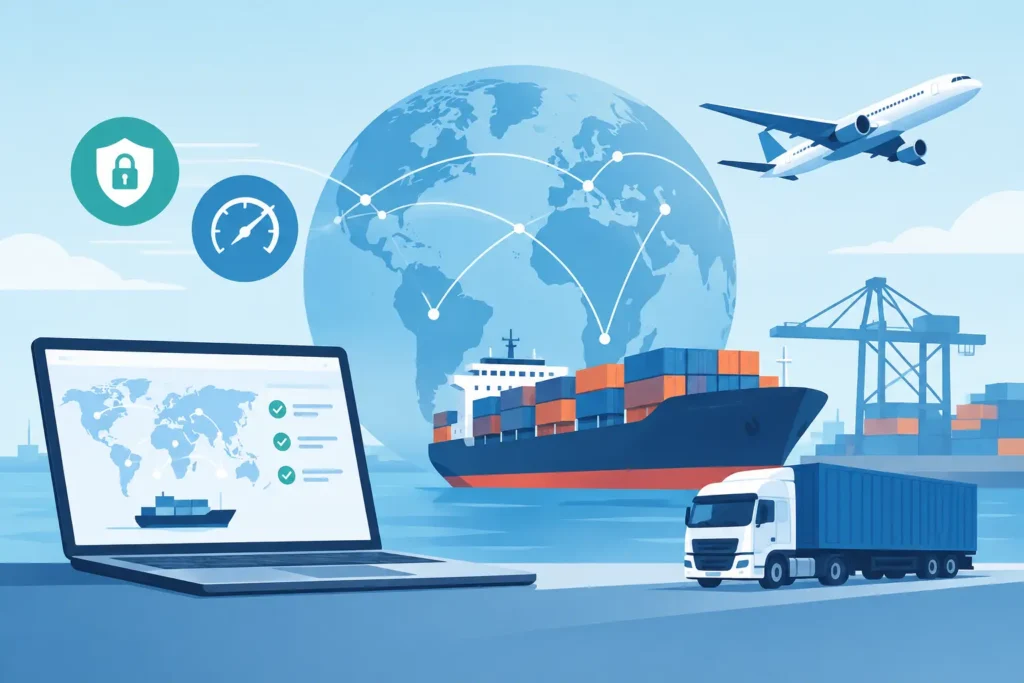
A shipment can be physically ready for pickup yet remain delayed because a commercial invoice has the wrong product description, a certificate is missing, or a customs query sits unanswered in an inbox. Trade digitization addresses this gap by turning shipment documents, milestones, approvals, and compliance data into connected, trackable workflows. For importers and exporters moving cargo through India, the UAE, and global trade lanes, the value is not technology for its own sake. It is greater control over cargo, costs, and delivery commitments.
What Trade Digitization Means in Freight Forwarding
Trade digitization is the use of digital systems to create, exchange, validate, and monitor information involved in international trade. This can include shipping instructions, commercial invoices, packing lists, bills of lading, air waybills, customs declarations, certificates of origin, cargo insurance records, and delivery confirmations.
In practical freight operations, digitization replaces scattered emails, paper files, and manual status calls with a clearer operating record. A shipper can see when cargo was collected, when export customs clearance was completed, whether a vessel or flight departed as planned, and what documents are still needed before destination clearance.
The principle is straightforward: cargo moves better when the information moving with it is accurate, available, and acted on quickly. That matters especially on India-UAE routes, where time-sensitive inventory, port procedures, customs requirements, and multiple handoffs can create delays when documentation is incomplete or inconsistent.
Why Trade Digitization Matters to Importers and Exporters
Freight is not only a transportation purchase. It is a chain of decisions involving suppliers, buyers, freight forwarders, carriers, brokers, warehouses, banks, insurers, and government authorities. Each party depends on the same core shipment details, but a single version of the truth is not always available.
Digital processes help reduce this friction. When booking details, cargo dimensions, tariff classifications, consignee information, and supporting documents are captured early, teams can identify issues before cargo reaches a port or airport. This reduces avoidable storage charges, amendment fees, missed cutoffs, and clearance delays.
For supply chain managers, visibility also improves decision-making. A delayed container may require inventory reallocation. A late air shipment may need a different delivery arrangement. An exception identified while cargo is still in transit is usually less expensive to manage than one discovered after arrival.
Digitization can also improve customer service. Rather than asking customers to chase multiple parties for updates, a freight partner can provide relevant milestones and explain what action is required. Visibility is useful only when it is tied to accountability, not when it simply creates more notifications.
Faster Documentation Does Not Mean Less Control
Digital document exchange can shorten processing time, but it should not remove essential review. Commercial documents must still match the actual cargo and agreed Incoterms. Customs declarations still require correct values, quantities, descriptions, and classifications. A digital error can travel faster than a paper error.
For this reason, the most effective approach combines automation with experienced oversight. Repeated fields can be carried from an approved shipment record into later documents, while high-risk details receive a human review. This is particularly valuable for regulated goods, project cargo, high-value vehicles, and shipments with complex origin requirements.
The Operational Areas That Benefit Most
The strongest results usually come from digitizing points where delays or rework are common. Booking management is one example. When cargo-ready dates, dimensions, packing requirements, pickup locations, and shipping preferences are captured in a structured format, the freight forwarder can select and plan the right service more efficiently.
Document management is another. A controlled digital folder gives authorized teams access to current invoices, packing lists, transport documents, and clearance records. Version control matters here. Sending a superseded invoice to customs or a carrier can create needless amendments and slow release.
Customs preparation benefits from early data collection. Importers and exporters should not wait until cargo arrives to confirm product descriptions, commodity codes, declared values, country of origin, or permit requirements. Pre-clearance checks allow a customs team to raise questions while there is still time to correct documents.
Shipment tracking is equally important, though it should be viewed realistically. A tracking platform cannot prevent weather disruption, port congestion, flight cancellation, or customs inspection. What it can do is make the event visible sooner, record the revised plan, and support timely communication with buyers and internal stakeholders.
India-UAE Trade Requires Connected Information
The UAE is a major distribution and re-export hub, while India remains a vital manufacturing, sourcing, and consumer market. Cargo moving between these markets may involve ocean freight, air freight, LCL groupage, land connections, warehousing, and final-mile delivery. Each mode has distinct document and timing requirements.
A digital workflow helps connect these stages. For example, an importer can align supplier documents in India with destination customs requirements in the UAE before dispatch. A UAE exporter can organize shipping instructions and cargo records before goods move to an Indian port or airport. This coordination is especially useful when shipments involve multiple suppliers, consolidated cargo, or delivery to a warehouse before final distribution.
Where Digitization Has Limits
Trade digitization is not a replacement for a capable freight partner. Ports, airlines, shipping lines, customs authorities, and overseas agents may operate on different systems and standards. Some original documents, inspections, or legal processes may still require physical handling depending on the destination, commodity, and transaction structure.
There is also a cost and implementation trade-off. A large enterprise may justify deep system integration with enterprise resource planning, procurement, and warehouse platforms. A growing importer may get better results by first standardizing its shipment data, document templates, and approval process. The right level of investment depends on shipment volume, cargo complexity, number of markets, and the cost of current errors.
Data security deserves the same attention as speed. Shipping records can contain commercial values, supplier information, customer addresses, and product details. Access should be role-based, sensitive files should be protected, and teams should know which documents can be shared with carriers, brokers, buyers, or other third parties.
How to Start Trade Digitization Without Disrupting Operations
Start with the points causing the most frequent delay. If customs holds are common, focus first on document accuracy and pre-arrival review. If customers repeatedly request shipment updates, establish consistent milestone reporting. If invoice versions are confused between purchasing, finance, and logistics teams, create one controlled document process.
Next, define the data that must be correct at the start of every shipment. This typically includes shipper and consignee details, cargo description, quantity, weight, dimensions, value, origin, commodity classification, collection address, delivery address, and service requirements. The goal is to avoid re-entering the same information across emails, spreadsheets, carrier portals, and customs documents.
Then assign ownership. Someone must confirm cargo readiness, someone must approve commercial documents, and someone must respond when an exception is raised. A digital tool can route a task, but it cannot decide who is accountable for completing it.
Finally, measure results using operational outcomes rather than software activity. Track documentation error rates, customs clearance time, missed cutoffs, storage costs, status-response time, and delivery performance. These indicators show whether the process is actually improving freight execution.
Choosing the Right Logistics Support
A freight forwarder should be able to translate digital information into practical action. That includes reviewing documents before shipment, coordinating with carriers and customs teams, communicating exceptions clearly, and adapting the plan when conditions change. Technology is most useful when supported by people who understand cargo movement on the ground.
For businesses trading between India, the UAE, and wider global markets, Mass Freight Forwarding combines freight coordination, customs support, and cargo-specific handling with a focus on clear shipment management. Whether cargo moves by air, ocean, road, LCL consolidation, or a specialized project service, the objective remains the same: accurate information, controlled handling, and dependable delivery.
The best next step is not to digitize every process at once. Choose one recurring source of delay, make the information flow clear, and build from there. Each improvement gives your team more time to focus on customers, inventory, and growth rather than searching for documents or reacting to preventable shipment problems.